 John Myers
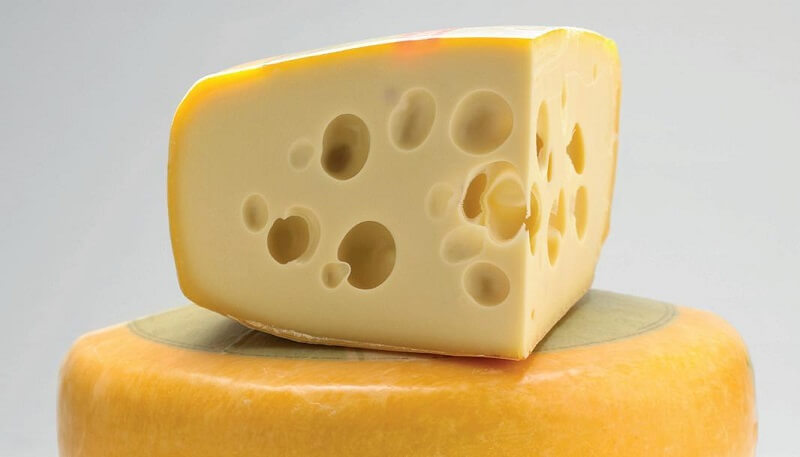
My friend told me that low-fat cheese contains more calcium than high-fat. Is that correct?
Yes, that’s basically true. Some of the calcium is bound to the protein contained in the cheese. Calcium, on the other hand, does not bind to the fat in cheese. The lower-fat a cheese is, the higher its protein content and thus its calcium content.
If you want to pay special attention to your calcium intake, it is worth comparing the calcium content of different types of cheese . Because these differ between the varieties sometimes much more clearly than between the different fat content levels of one and the same type of cheese.
Sour milk cheese (e.g. Harzer, quark) is one of the low-calcium types of cheese, for example, because here calcium flows off with the whey. Rennet cheese, which includes sliced and hard cheeses such as Gouda or Emmental, contains significantly more calcium. The harder a cheese is, the higher its calcium content.
Below are a few examples (calcium content per 100 g of cheese):
- Limburger (20% fat in dry matter): 610 mg calcium
- Limburger (40% fat in dry matter): 535 mg calcium
- Camembert (30% fat in dry matter): 600 mg calcium
- Camembert (60% fat in dry matter): 490 mg calcium
- Butter cheese (30% fat in dry matter): 800 mg calcium
- Butter cheese (60% fat in dry matter): 600 mg calcium
- Edam (30% fat in dry matter): 800 mg calcium
- Edam (45% fat in dry matter): 678 mg calcium
- Emmental (45% fat in dry matter): 1029 mg calcium
- Parmesan (45% fat in dry matter): 1178 mg calcium.


Facebook Comments