 John Myers
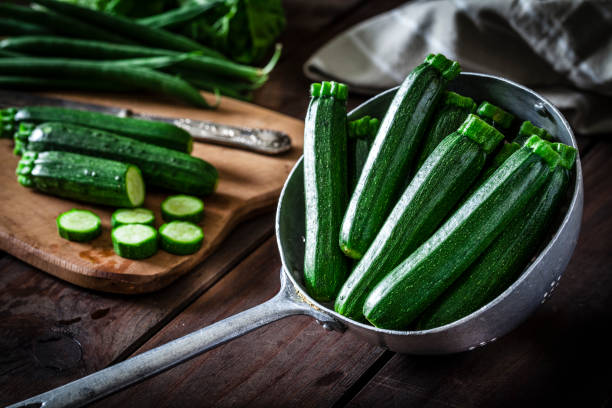
The zucchini belongs to the pumpkin family. It is a bred descendant of the garden pumpkin imported from America. Zucchini began its triumphal march through European kitchens in Italy. Each plant bears male and female reproductive organs in separate flowers. Their fruits can be spherical and yellow or deep green and around 15 centimeters long.
Zucchini flowers are a delicacy
The male flowers can be harvested without losing fruit. The flowers alone contain a lot of beta-carotene, which the body converts into vitamin A. It protects the eyes and skin. In addition, the flowers contain almost twice as much phosphorus as the fruit. Phosphorus is needed to build cell walls. Zucchini also contains a lot of potassium, which is important for the water balance. Zucchini blossoms can be stored for one to two days.
Lots of magnesium and iron, few calories
The zucchini fruits contain plenty of magnesium – good for muscles and nerves – and iron, which is important for blood formation. Above all, however, zucchini contain almost no fat and only a few carbohydrates.
Zucchini is the ideal filler: they provide a lot of mass, but hardly any calories. For comparison: 200 grams of zucchini contain only 40 calories and 200 grams of ground beef 660 calories. So, to get the same amount of calories, you can eat about 16 zucchini.
Since courgettes absorb liquid very quickly, add them to the pan one at a time. This way they get nice and crispy.
Beware of toxic bitter substances
Zucchini naturally contain toxic bitter substances (cucurbitacins). They were bred from the fruits that are commercially available today. Be careful with homegrown zucchini, because there have already been deaths from so-called reverse mutations. Hobby gardeners should therefore buy young plants or seeds from specialist retailers and never multiply zucchini themselves. Poisonous zucchini can be recognized by their very bitter taste.


Facebook Comments