 John Myers
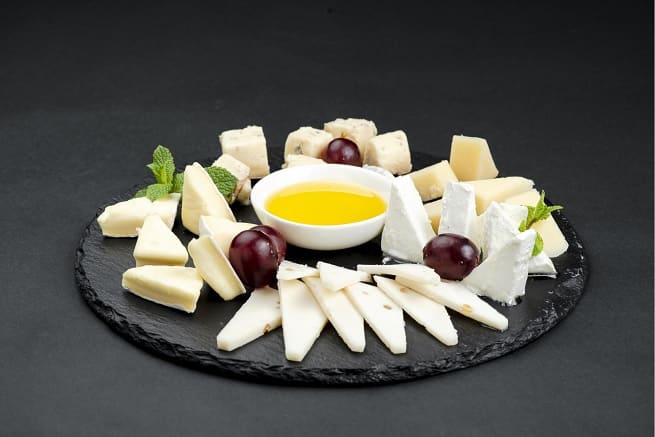
When decorating a cheese platter, it can be a little more! But beware: The cheese is and remains the center of attention and should not be trumped in terms of taste or appearance. But otherwise you have a wide range of options when it comes to the set.
The basis of an attractively arranged cheese platter is, in the truest sense of the word, the platter itself on which you present the cheese. It can set the general direction of the decoration: a wooden board looks more rustic, plates made of glass or porcelain are more elegant and filigree.
The cheese itself should also be arranged decoratively. Before serving, cut off just a few pieces of each cheese, otherwise leave it whole. This is not only visually advantageous, but also prevents the cheese from drying out too quickly.
The decorative elements are those that set visual highlights and complement the taste of the cheese. It is best to rely on colorful fruit or vegetables in the classic way. So that the cheese platter does not make an overloaded impression, decide on only one or two places on the platter that you want to decorate with it. Pepper strips, cherry tomatoes or grapes are particularly common here and can be combined with any cheese. Choose the seedless variant for the grapes. Supplement hard cheese and semi-hard cheese with fruit such as pears or apples. Soft fruit goes very well with soft cheese. Small stalks of chives or edible flowers on the cheese platter, such as marigolds or nasturtium blossoms, are particularly decorative. These achieve a beautiful effect, especially on glass or porcelain.
In addition to decorative and at the same time edible elements, various dishes are suitable as a side dish. Nuts, for example, go well with many types of cheese. For example, opt for walnuts in small bowls if you also serve cheese with nuts in them.
Dips or sauces such as honey, jellies or chutneys also go well with a cheese platter. When choosing, pay attention to a tasteful balance of sauces and cheese. Combine a fruity chutney, for example made from apricots, with soft cheese with white noble mold. Different mustard sauces with a fruit component are also good. A fruit jelly, for example, made from pears, or a sweet mustard sauce goes well with savory and spicy semi-hard cheese. Matured hard cheese, on the other hand, goes well with honey, blue cheese with wine jelly.
An almost indispensable accompaniment to a selection of cheeses is bread. On the one hand it saturates, on the other hand it helps to neutralize the palate. Choose a bread with as neutral a flavor as possible, such as light-colored baguette or other white bread. If the bread contains dominant spices and too much salt, this would affect the taste of the cheese.


Facebook Comments