 John Myers
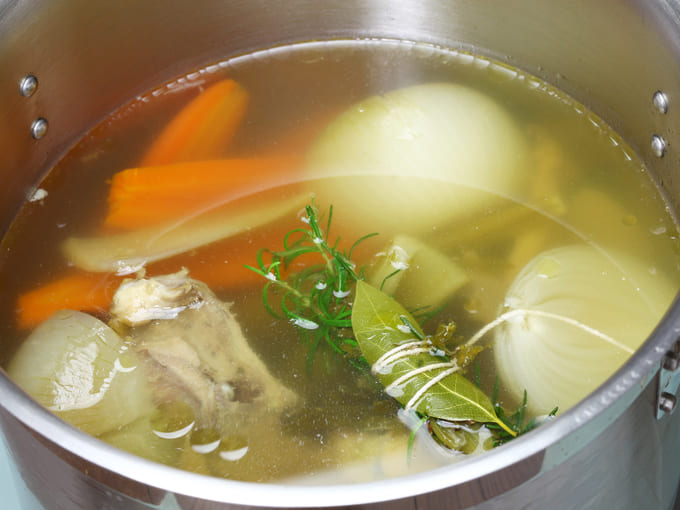
Bones are an excellent source of aroma for stocks and broths. Depending on the type of bone, they can contain minerals and fat and transfer them to the food. Bone is processed in many different ways.
To make a stock, you use the appropriate bones from beef, veal, lamb, game, or much less often from pork. For poultry stock, on the other hand, whole animals are boiled down, for example, a soup chicken. For a classic roast stock, the bones are first roasted in the oven and then cooked with vegetables and tomato paste and poured over with wine and water. With the addition of spices, the stock is then reduced further and further and strained. This gives the stock an intense aromatic flavor and makes it a good basis for gravy.
For a broth, on the other hand, the bones are boiled. Veal or beef bones are used particularly frequently for this purpose. A basic distinction is made between marrow bones and sand bones. Marrow bones are cut from the long bones of the thighs of veal and beef. Inside they contain bone marrow, which is also utilized. Sand bones, on the other hand, come from the ball joints of cattle and veal and do not contain any marrow. During preparation, they are often mixed with marrow bones.
The marrow in the bones contains minerals and fat. They give many dishes a particularly intense taste. For the preparation, marrow bones are put on, for example, with cold water and usually boiled with vegetables to form a broth. The bones are then removed, but the marrow can be eaten, for example as a topping for bread or as an ingredient in soups.
A particularly well-known dish made from bone marrow is marrow dumplings. For this purpose, a marrow bone is heated in a pan until the marrow can be removed. Then it is mixed with breadcrumbs and spices, formed into small dumplings, and placed in a broth so that it can simmer. Bone marrow is also used for risotto alla milanese: At the beginning of the preparation, beef bone marrow is sweated together with onions. Bordeaux sauce, on the other hand, contains blanched beef marrow.
Because the spinal cord of cattle, sheep, and goats is one of the potential risk tissues for transmission of BSE, sale, and processing within the EU is prohibited. However, bone marrow from other parts of the slaughter animals is considered harmless to health.


Facebook Comments