 John Myers

The Italian ham production has a long tradition and is respected worldwide. Four famous examples of high-quality cured Italian ham are Parma ham and San Daniele, Culatello and Bresaola.
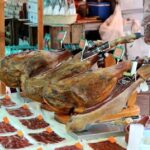
Prosciutto di Parma (Parma ham) is probably the best-known ham from Italy in this country. The region of Parma, in which the town of Langhirano is located, is named after it – this is where ham was invented. There are some conditions for its production. It is made exclusively from pigs of the Duroc, Landrance and Large White breeds, which must come from certain northern and central Italian provinces. Parma ham has a mild flavor and a rather crumbly consistency, the color is pinkish-brownish. The mild taste comes from the fact that little salt is used during production compared to other hams. Then it is air dried. Real Parma ham can be recognized by a five-pointed crown on the rind – the sign of the Archduchy of Parma.
Proscuitto di San Daniele (San Daniele ham) is quite similar in color and taste to Parma ham and is made from the same breeds of pigs. Essentially, it has a slightly milder taste and is similar in shape to a mandolin. It also tastes a bit sweet and nutty. It was developed in the town of San Daniele, near Udine. The production quantities are much smaller than for Parma.
The Culatello di Zibello comes from the town of Zibello near the city of Parma. The ham is seasoned with wine and garlic, among other things, and has a correspondingly stronger aroma than Parma and San Daniele. It is made from the meat of two breeds of pigs, the Nero di Parma and the Mora Ramognola. In contrast to the Parma ham and the San Daniele, the culatello is laced without bones.
Bresaolo della Valtellina, on the other hand, is a beef ham and is usually made from the tip of the beef leg. It is very similar to Bündnerfleisch from Switzerland, but has a milder and more delicate taste.
Real Italian hams are protected by the seals that guarantee the origin of the products. The San Daniele and the Culatello bear the DOP seal. The protected designation of origin guarantees that production, manufacture and processing take place in a specific region and according to defined procedures. The DOC seal for the Parma ham guarantees that, in addition to the criteria mentioned, other, stricter requirements have also been met: the Parma ham even has to be cut in the region. The IGP seal for the bresaola only guarantees that one of the manufacturing steps takes place in the specified region.

Facebook Comments