 John Myers
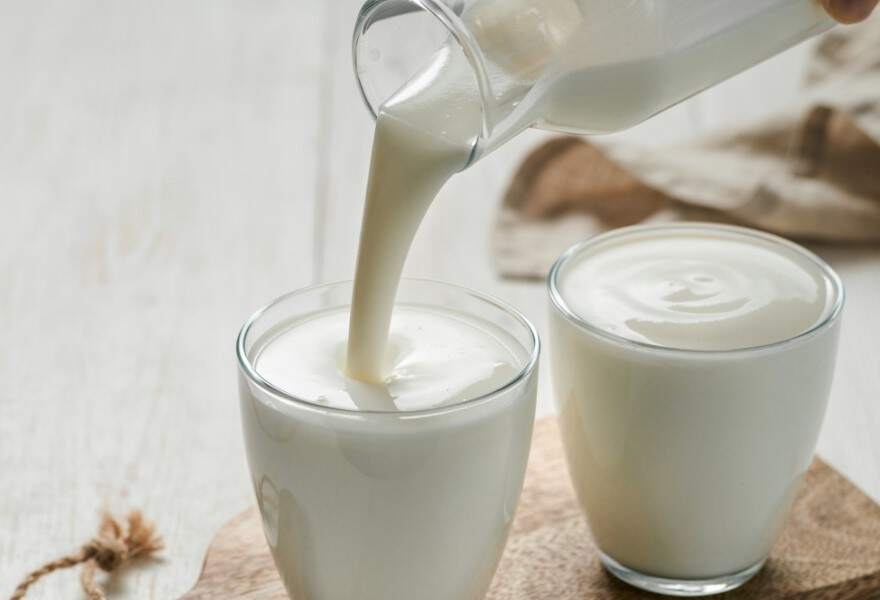
Whether you prefer to drink buttermilk or kefir, both dairy products are considered extraordinarily healthy and refreshing. At first glance, the two drinks are similar. In this article you will find out how buttermilk and kefir differ and what makes them so valuable for nutrition.
Buttermilk or kefir: That’s the difference
Buttermilk and kefir look almost identical at first glance and also taste similar. But despite many similarities, both foods differ primarily in the production process.
- Buttermilk is a by-product of butter production . In this process, the raw milk is first skimmed in a centrifuge.
- In order to make butter from the obtained cream, it is first beaten. The fat binds to small butter balls, the remaining liquid is the buttermilk.
- Kefir, on the other hand, is made by adding kefir to the milk. This is a fungus that metabolizes milk sugar. This process produces carbonic acid and lactic acid, which give the kefir its refreshing taste.
- In addition to milk kefir, there is also cream kefir and water kefir. Milk kefir is traditionally made primarily from cow’s milk, sheep’s milk or goat’s milk. Fermentation produces small amounts of alcohol in kefir, which is why it should not be consumed by pregnant women.
Buttermilk and kefir: That’s what makes dairy products so healthy
Whether you prefer to consume buttermilk or kefir is primarily a question of personal taste. Both dairy products are a valuable addition to your diet.
- Both buttermilk and kefir are rich in valuable protein but low in calories. An exception is the cream kefir, which contains more than 10% fat.
- Both dairy products contain vitamin A, B vitamins and potassium. Also included are folic acid, iron and magnesium, calcium , zinc and phosphorus.
- Kefir and buttermilk contain only small amounts of lactose. Therefore, both foods are usually easily digestible even for people with a slight lactose intolerance.



Facebook Comments