 John Myers
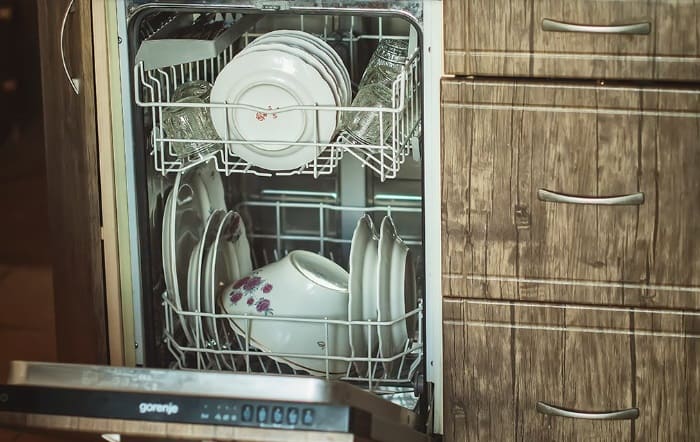
Dishes don’t get clean in the dishwasher: small measures
If your dishwasher no longer performs as well as you want, you don’t always have to call in an expensive craftsman. Sometimes even small measures that you can easily carry out yourself can help.
- Just like with the washing machine, you should not fill the dishwasher too full, as the water jet and the detergent then usually no longer reach all the dishes.
- The same applies to the arrangement of the dishes in the dishwasher. You should arrange the dishes in such a way that there is still enough space in between for detergent and water. For example, alternately a smaller and a large plate.
- An old household remedy is also helpful: Put half a lemon in the dishwasher as well. Alternatively, you can try citric acid.
- Another old housewife tip is to put rolled-up aluminum foil in the cutlery compartment. The aluminum foil should give the cutlery a new shine.
- Your water may be very calcareous, in which case one tab may no longer be sufficient. In this case, your cleaning result could be better if you also use some rinse aid and add a little regeneration salt to the water tank. You should also check whether you have set the softening system in the dishwasher according to the degree of hardness of your water.
- If you usually use the eco mode, it is helpful to run the dishwasher at 60 degrees once a month to kill the bacteria.
Cleaning the dishwasher
It is often also helpful to thoroughly clean the dishwasher yourself if the dishes are no longer really clean or have unsightly deposits.
- The leftovers from ready meals in particular often leave a certain amount of fat in the dishwasher, so you should degrease it regularly every one to two months with an appropriate machine cleaner. Alternatively, you can try your luck with washing soda, which has also proven itself as a degreaser. Pour some washing soda into the detergent compartment and then let the machine run empty once at 60 degrees. To tackle the limescale, repeat the process with vinegar.
- Bad odors are also often caused by kinks in the waste water hose, since water residues tend to collect there, in which rapid germ formation takes place. Therefore, always hang the water hose as straight as possible.
- The spray arms of the dishwasher also deserve your special attention. Of course, if the water nozzles are clogged, the dishes can no longer be cleaned properly, so it is worth checking the nozzles regularly.
- Rinsed leftovers often get stuck in the sieve and spread unpleasant odors, among other things, so you should also check and clean the sieve regularly.
- If you notice a layer of salt on the dishes, you should close the salt container properly.
- Another reason for the reduced performance of your dishwasher could be that someone accidentally played around with the water supply and your household appliance is no longer working with the necessary water pressure.


Facebook Comments