 John Myers
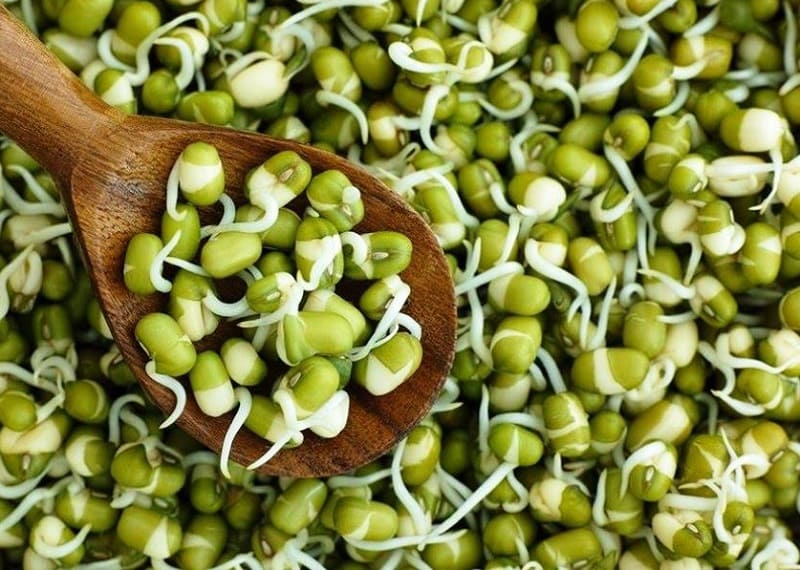
The germination of the mung beans is quite uncomplicated and is therefore usually not a problem even for beginners of the sprout diet. By the way, the mung beans are also healthy and can be used in the kitchen. So there are a few reasons to try germinating mung beans at least once.
Mung beans germinate – that’s why it’s worth it
The mung bean is also sometimes referred to as “green soybean” and of course not without reason. In fact, both the mung bean and the soybean belong to the legume family, which are closely related to each other. While the young mung bean sprouts still have a slightly sweet taste, this becomes much tart as the ripening process progresses.
- Especially in Asian cuisine, mung bean sprouts are indispensable. Mung bean sprouts are used in almost every wok dish. But mung bean seeds are also very popular as aromatic and, above all, healthy flavor enhancers in salads, on spreads or in soups.
- In addition to the seeds, the mung beans can also be used very well in the kitchen. Mung beans are just as suitable as delicious vegetable side dishes as they are in the form of patties or spring rolls. Ultimately, there are hardly any limits to your imagination.
- The mung beans come up with a variety of nutrients, with the protein content in particular being quite high at around 25 percent. But the mung bean can also score points with minerals that are important to us , such as iron, magnesium, calcium, potassium and phosphorus. There are also folic acid and niacin, vitamins A and B, vitamins C and E, B1 and B2 vitamins as well as vitamin K and last but not least a high fiber content.
- The high fiber content of the mung beans not only ensures a quick and lasting feeling of satiety, but also a balanced intestinal flora. Mung beans are also said to offer some protection against tumor formation and lower cholesterol levels. Due to their isoflavone content, mung beans, like soybeans, are also popular as a natural remedy to alleviate menopausal symptoms.
- If you germinate the seeds of the mung bean, the nutrient density increases. The sprouts impress with a particularly high vitamin E content, which is also often referred to as a beauty vitamin. Due to its antioxidant effect, vitamin E protects the cells from free radicals and thus prevents premature aging. In addition, some of the proteins are converted into the amino acids that are essential for us during the germination process, so that our organism can use them better.
Let mung beans germinate – this is how the sprouts succeed
The germination of the mung bean seeds is not particularly labor-intensive and usually succeeds without any problems even for beginners. The mung bean seeds are germinated in a germination tower, a germinator and in a simple glass. Germinating seeds in a germinator is the most convenient, but it is also the most expensive option.
- To try out whether germination is something for you at all, a simple jar with a lid or a germination jar is sufficient . The lid is provided with fine holes so that the water later drains off easily and no mold forms.
- At the beginning of the germination process, it makes sense to protect the perforated lid with a thin cotton cloth, such as a large handkerchief, while the water is flowing through. Otherwise you run the risk of the seeds slipping through the holes together with the water.
- However, before you start germinating, first wash the mung bean seeds well in a thin- mesh sieve under running water. The mung beans are then placed in a bowl with plenty of water. Since the seeds swell very much, the water level can be three to four times as high.
- After the seeds have soaked for a good twelve to thirteen hours, drain the water. Then first sort out all seeds that are not swollen or have damaged areas such as brown spots. All other mung beans are allowed in the germination container.
- Water the seeds three times a day with soft, lukewarm water. Use a simple glass and tilt it upside down so that the water can drain off easily. Make sure that no water is left in the glass, as the seeds will mold quite quickly.
- Tip: The water that flows out contains numerous nutrients and is therefore perfect for watering flowers .
- Mung beans belong to the so-called dark germs, so it is best to place the germ jar with the seeds in a dark place. The temperature should range between 18 and 22 degrees.
- Mung beans germinate quite quickly, so you can quickly enjoy the healthy sprouts. After about three days, the mung bean sprouts are usually ready to eat. You should remove the sprouts from the germination device by the fourth day at the latest. Mung beans initially taste crisp, fresh and slightly sweet, but the longer they stay in the jar, the more bitter the taste becomes.
- Since the mung bean sprouts no longer contain the toxic phasin, you can sprinkle them straight on the cream cheese on the morning roll or over the salad and thus provide yourself with an initial nutrient boost.


Facebook Comments