 John Myers
Ingredients for 1 servings:
- 120 g sugar
- 300 g wheat flour, type 405 or 550
- 1 pinch of salt
- 150 g butter
- 2 tbsp vanilla sugar
- 1 egg(s)
- 1 tbsp cream, milk or condensed milk
- 150 g couverture or block chocolate, about 100-150 g
- 5 sheets of gelatin
- 300 g yogurt, pure or natural
- 4 tbsp lemon juice
- 1 tbsp lemon peel
- 50 g sugar
- 200 ml cream
- 5 sheets of gelatin
- 1 small can of peaches or apricots, about 420 g
- 1 tbsp lemon juice
- n. B. Sugar granules, for sprinkling
Instructions
Working time approx. 45 minutes; Rest time approx. 6 hours; Cooking/baking time approx. 25 minutes; Total time approx. 7 hours 10 minutes
funny and delicious – not just for Easter
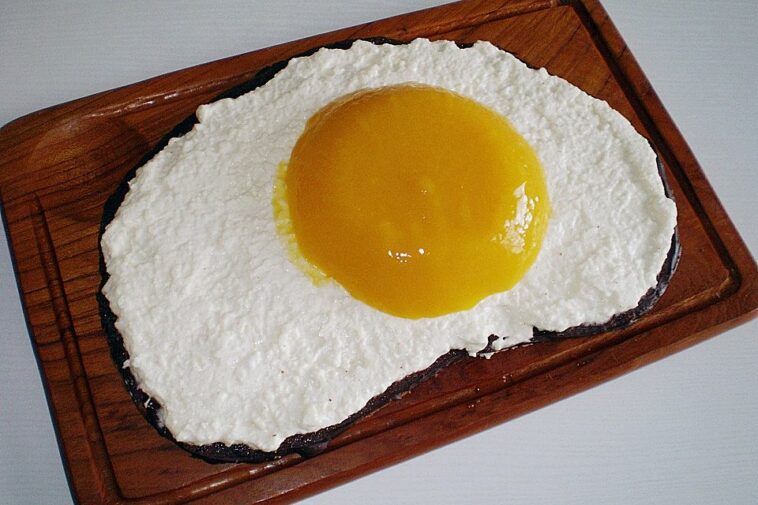
First, soak the gelatin for the topping, or “egg yolk.” Puree the peaches or apricots with their juice and lemon juice. Dissolve the gelatin in a water bath while it’s still dripping wet, adjust with a little peach puree, and then stir. Chill the puree in a cold, rinsed bowl (preferably dome-shaped) to set. Knead the ingredients for the base into a smooth dough—this works well by hand, but you can also use a mixer or food processor. Then roll out the dough on a baking sheet (lined with baking paper) into a fried egg-sized pan (or somewhere else and then transfer it)—it can be a bit uneven, as you like. Now bake at approximately 200°C (top/bottom heat) for about 20-25 minutes and let cool. Now soak the gelatin for the cream, or “egg white.” Mix the yogurt with the lemon juice, lemon zest, and sugar until smooth. Dissolve the gelatin in a water bath, until it is dripping wet, adjust with a little yogurt cream, then stir and refrigerate. Melt the chocolate or couverture in a water bath, brush it over the base, and let it harden. As soon as the yogurt begins to set, whip the cream until stiff, fold in, and spread the cream over the base. Leave a few irregular edges of chocolate visible here and there – this is the crispy fried egg edge that sometimes develops when fried. As soon as the “yolk” (the peach puree) is set, carefully turn it out onto the “egg white” – in the center, depending on your preference, or slightly towards the edge, where the yolk might be in a fried egg. If that’s too risky for you, you can also turn the “yolk” out onto a rinsed, suitably sized plate and then use this to place the yolk on top – the film of water will allow you to easily slide it off the plate. To serve, sprinkle the yolk with sugar – this is essentially the “salt.” If you like, you could also add dots of strawberry puree (as “ketchup”)… chopped lemon balm (as “parsley”)… fine chocolate shavings (as “black pepper”), etc. as decoration. A note perhaps regarding serving this somewhat misshapen and, above all, large cake: We’ll use a large board, which I’ll cover with pretty fabric and then cling film.


Facebook Comments