 John Myers
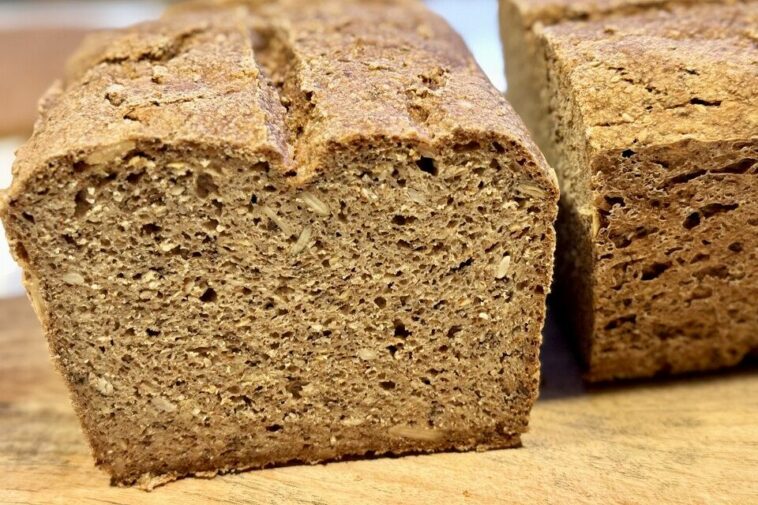
Ingredients for 1 servings:
- 100 g corn
- 100 g brown millet
- 50 g white beans
- 50 g quinoa
- 1 tsp baking soda powder, gluten-free
- 1 tbsp baking ferment base, gluten-free
- 200 g plantain flour or cornstarch
- 100 g oat flakes
- 2 medium-sized potatoes, grated raw
- 4 tsp oat sprouts
- 30 g amaranth
- 20 g chia seeds
- 1 tsp psyllium husk flour
- 15 g grape seed flour
- 18 g gelatin or 6 g locust bean gum or guar gum
- 3 tsp flour (broad bean flour)
- Fat for the mold
Instructions
Working time approx. 30 minutes; Rest time approx. 2 days 10 hours; Cooking/baking time approx. 1 hour; Total time approx. 2 days 11 hours 30 minutes
only natural ingredients, no flour mixtures, no yeast
This bread gets its bread-like flavor from the slow preparation, also called slow baking. You have to start the day before. If you do the first two steps the morning before, you can bake the next evening. Step 1 (day before): Grind all ingredients except the amaranth and chia seeds into a fine flour or buy ground ones. Grinding is better with a blender than a mill. 24 hours before preparing the dough, mix the ingredients from corn to baking powder with water to form a soft dough. Cover and keep warm. Step 2 (day before): Mix the basic mixture with 30°C water and the banana flour. The consistency should be like pancake batter. This mixture must be covered and fermented at 30°C. This works wonderfully in the oven by unscrewing the cover of the lamp and leaving only the light on. Step 3 (day before baking): The next morning, the mixture should have fermented noticeably, i.e., be riddled with bubbles, and have increased in volume. Ideally, the soaking dough should also be fermented, but this depends on the natural yeast present and is not absolutely necessary for success. Now quickly mix all the ingredients together. For gluten-free breads, prolonged kneading is counterproductive. Let the dough ferment in a bowl at 30°C until it has increased significantly in volume. Over-fermentation is not a problem; you can prepare the dough in the morning and not continue working with it until the evening. It will only become slightly more acidic as a result. Briefly stir the fermented dough and pour it into a greased loaf pan. Let it ferment again; this will take about 1 to 1.5 hours. Preheat the oven to 240°C (top/bottom heat), bake the bread for 10 minutes, then reduce the temperature to 200°C. After about half an hour, the bread can be removed from the pan, then bake it on the baking sheet for another 30 minutes, until it sounds hollow and has formed a nice crust. The bread relies on many ingredients in small quantities, so nothing tastes too strong. However, you can substitute ingredients if you’re missing something. With two exceptions, the ingredients can be found in health food stores or drugstores with an organic section. Unfortunately, plantain flour is mostly only available online. But it’s worth buying; it’s a great binding agent and can be used in many ways. It’s not an isolated food like starch. Plantain flour is completely tasteless. The broad bean flour can be omitted if it’s too difficult to source. It’s used to form the crust. I simply bought a large quantity of broad beans at an auction house and finely chopped them in a blender.


Facebook Comments