 John Myers
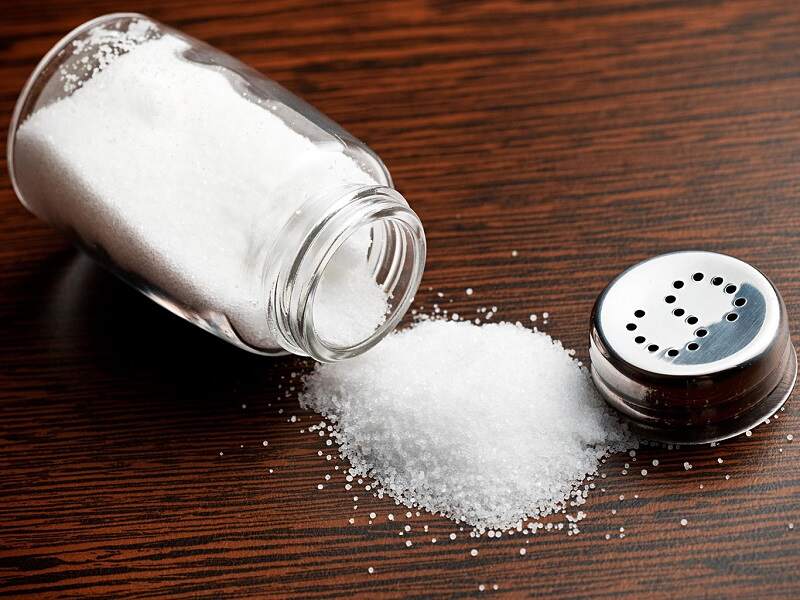
Salt is essential to life. But how much is too much – and what are the consequences? An overview.
What is table salt and what do we need it for?
Table salt, also known as cooking salt or table salt, consists almost exclusively of sodium chloride. Depending on the type and purity, up to three percent of other substances are naturally included, including calcium, magnesium and potassium.
Sodium chloride is essential for many metabolic processes in our body. Among other things, it is responsible for the transmission of stimuli from nerve and muscle cells and regulates the water balance. It is also involved in digestion and bone formation.
Where does salt actually come from?
Our table salt is always sea salt! Also rock salt, of which there is plenty in Germany: 250 million years ago, a primordial sea evaporated here and left huge layers of salt in the ground. In North Rhine-Westphalia, for example, these layers are up to 250 meters thick and are mined at a depth of around 900 meters. Rock salt is either offered untreated or refined, i.e. freed from all natural additives.
How Much Salt Should You Consume?
In Germany, women consume an average of 8.4 grams of salt a day, men even more than 15. The Federal Institute for Risk Assessment (BfR) and the Max Rubner Institute (MRI) believe that this is too high and recommend one upper limit of 6 grams . That corresponds to about a teaspoon – there is often more in a frozen pizza. Some experts consider the optimal value of 3.8 grams of salt per day according to the WHO to be almost impossible to implement.
How dangerous is the wrong dose?
There is scientific consensus that too much salt can be harmful. There are many reasons, the first of which is particularly understandable for those who can’t get enough of chips: Salt stimulates the appetite and is therefore a factor in the widespread disease of obesity. It is clear that high salt consumption changes the composition of the intestinal bacteria and can thus also impair the immune system. The role of salt in the development of autoimmune diseases is still under investigation. Excess salt has to be removed from the body. The kidneys, which are responsible for this, are additionally burdened with this task.
High blood pressure – what role does salt play?
A high salt dose increases the pressure in the blood vessels. To put it very simply: the sodium binds water and thus increases the volume of the blood. But whether increased salt consumption increases the risk of high blood pressure has not been definitively proven. The fact is: high blood pressure and cardiovascular diseases are caused in particular by the interaction of hereditary factors, age, gender and various unfavorable diets and lifestyles. It is not known how important the salt is.
However, various studies have shown that lower salt intake improves blood pressure in people with hypertension.
What does salt sensitivity mean?
Salt affects everyone differently. About 20 to 30 percent of the population and almost half of people with hypertension are sensitive to salt. They respond to increased sodium intake with an increase in blood pressure and are unable to adjust sodium excretion accordingly.
Salt-resistant people, on the other hand, can hardly influence their blood pressure with salt. But: Salt sensitivity is a snapshot and can be changed a lot, especially by reducing salt. Recently, there are quick tests that determine the degree of current salt sensitivity.
Where is the most salt?
Table salt that we add to our food ourselves by adding or adding salt makes up only a small amount of our daily salt intake. 70 to 80 percent is primarily absorbed through processed foods. Bread, meat, sausage and cheese contain a particularly large amount of salt.
Since December 2016, the table salt content must be listed as a mandatory information in the context of food labeling. It’s worth taking a close look, because even sweet products such as chocolate and butter biscuits often contain salt.
Examples of foods with a high salt content (per 100 grams) are:
| salami | 3.15 grams |
| tomato ketchup | 3.25 grams |
| Pretzel Sticks | 4.48 grams |
| olives | 5.25 grams |
Are Additives Really Necessary?
Iodine is most commonly added to the salt, and the supply in Germany is not considered optimal. Salt iodization remains an important strategy for eliminating iodine deficiency disorders. Because: Iodine is essential for the development of the nervous system and growth processes. In principle, the (sparing) use of iodised table salt is recommended in private households, but in the case of thyroid diseases, the iodine intake should be discussed with experts.
Another common supplement is folic acid, which the body needs for DNA synthesis, among other things. In the last 15 years, care for the population has improved; today, around 86 percent of the adult population in Germany are considered adequately cared for.
The third classic additive is fluoride, which is known to be added to many toothpastes and is considered to prevent tooth decay. However, it is not necessary to combine several fluoride-containing products.
With a balanced, healthy diet, all three of the substances mentioned can be sufficiently covered. Then it’s enough to use salt without additives. An overdose of these substances with salt is hardly possible.
What are flow aids?
Table salt binds water. So that it does not clump, release agents are added as so-called flow aids. Classic flow aids are calcium or magnesium carbonate and sodium hexacyanoferrate. While the first two substances occur naturally in mineral water, for example, sodium hexacyanoferrate (E 535) does not inspire confidence.
And yes: the compound contains cyanide – but don’t panic: it’s bound so stably that it can’t be released in the body. If you prefer not to use any anti-caking agents at all, you can simply use coarse salt and a grinder. By the way, the classic grains of rice in the salt shaker are nonsense, they don’t absorb the water any better than the salt.
How useful are “precious salts”?
Fleur de Sel, black lava salt, Persian blue salt, Himalayan salt – manufacturers of gourmet salts not only promise a special taste, but also a wealth of nutrients. But even Himalayan salt consists of about 98 percent sodium chloride. The advertised “84 elements” could not be proven in studies – and the concentration would be irrelevant for our health. There is no scientific evidence for any healing effect.
The taste is also overestimated – after all, the precious salts differ only in nuances that quickly disappear in a dish. Much more important: the texture. Even non-professionals can taste the fleur de sel on the steak thanks to the crispy flakes. The problem: Studies regularly show microplastics in sea salt, the effects of which on the human body have not yet been clarified.
If you want to do something good for the planet, use unrefined salt from local production. It has the best environmental balance, is as healthy as precious salt – and costs only a fraction.
What salt alternatives are there?
There are not only substitutes for sugar, at least many people with hypertension are also familiar with “diet salt”. Sodium chloride is replaced here by potassium and magnesium chloride, or at least greatly reduced. Various studies suggest that switching to diet salt has a positive effect on people with high blood pressure. But the taste doesn’t come close to the original: It tastes less salty, but a bit bitter or metallic.
Has the food industry recognized the salt problem?
At the end of 2018, the so-called reduction strategy of the federal government was launched. The project: to reduce diet-related diseases such as obesity, adult-onset diabetes and cardiovascular diseases. Accordingly, the sugar, fat and salt content in processed foods should be reduced.
However, the first assessment by the Max Rubner Institute for 2019 is sobering: the salt content was only recorded for the product group of frozen pizzas. There were no significant improvements compared to the 2016 baseline survey. A large reduction in salt on the part of the manufacturers is probably not to be expected in the next few years. When it comes to consumption, consumers should continue to pay close attention and keep salt consumption in mind.
What can we do to consciously consume salt?
A salt-reduced diet is particularly advisable for people with salt sensitivity and high blood pressure. But even healthy people are on the safe side with the recommended amounts of salt. The most important step: Avoid industrially processed products and use fresh ingredients with a strong taste of their own. Instead of salt, you refine your food with herbs and a wide variety of spices – and take the salt shaker off the table, because we often add salt out of sheer habit.


Facebook Comments