 John Myers
Why should meat be substituted?
When it comes to replacing meat, proteins are often the most important argument. Meat is an important, sometimes even vital source of protein for populations worldwide. If everyone were to omit meat from their diet overnight, many would be missing an important part of a balanced diet. In view of the disadvantages for health and the environment, initiatives and researchers around the world have been thinking for years about how humanity could move away from its sometimes high meat consumption. In addition to the type of protein, it is often important that the substitute products look as similar as possible to meat or replace its function in a meal.
What meat alternatives are there?
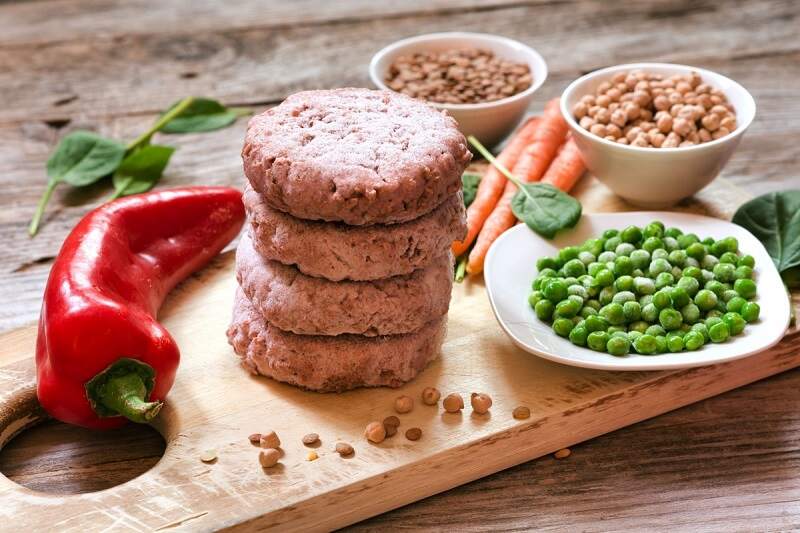
Anyone who does not want to eat meat and is looking for a rich source of protein will quickly come across legumes . It is therefore obvious that manufacturers of meat substitutes often use peas, lupins or a wide variety of beans. They often use whole or ground legumes to make a burger patty, for example. In some cases, however, they only use the peas and beans as a basis for elaborate further processing until only selected nutrients are left and the product can no longer be easily distinguished from real meat in terms of appearance and taste.
Products made from soybeans , tempeh and especially tofu are also popular meat alternatives. Tempeh is basically fermented soybeans that have been broken down with a mold. It is often used in Indonesian cuisine. Tofu , on the other hand, is not usually fermented and is made from soy milk and has many uses. It’s not so much the texture or taste that makes tofu a meat substitute, but more the protein it contains and the fact that it can be easily fried, fried or boiled in place of meat without having to change the original dish significantly.
In addition to tofu, seitan is often used as a meat substitute in restaurants in this country. It consists of wheat protein, is versatile and is mainly used in Japanese cuisine. Seitan preparations can look a little more like real meat than tofu. There are also other meat alternatives that are based on grain. Patties, which can replace meatballs, for example, are made on the basis of spelled or unripe spelt, among other things.
There are also meat substitutes made from mushrooms. More specifically, from a small mold of the genus Fusarium . To make something edible for frying or cooking, the mushroom cultures are fermented to turn into mycoprotein . Its consistency is fibrous, which is why it can be used to make many things that resemble meat: sausages, vegan minced meat, spreads or schnitzel for frying.
Jackfruit is relatively new to supermarket shelves, at least outside of its Asian homeland . The fruits have become popular as a meat substitute because they have a fibrous structure and can absorb the flavor of a marinade well. This makes them a good addition to dishes that would otherwise use heavily seasoned, finely chopped meat, such as pulled pork or kebabs.
Insects or laboratory meat as an alternative?
Finally, there are two other approaches that are not yet – or at least rarely – found on German supermarket shelves. On the one hand, there are products made from insects. And on the other hand, meat that is produced in the laboratory without ever fattening or slaughtering an animal. In particular, preparations made from insects, such as crickets or beetle larvae, are considered to be a promising way of ensuring a balanced diet for the world population in the future. The animals are often processed as flour in burger patties or dough preparations.
In vitro meat, as laboratory meat is also called, is currently mostly still in development – laboratory meat from a manufacturer in San Francisco has only been approved in Singapore. It is made from stem cells, which are obtained, for example, from the muscle tissue of cows and are further developed into real meat in the laboratory. Neither the insects nor the laboratory meat are currently being produced in the quantities needed to play a serious role in feeding populations. The products are correspondingly expensive. A pack of insects online can easily cost around 14 times as much as the same amount of organic ground beef. And a portion of in-vitro meat was initially not available for less than a few hundred thousand euros. However, this can change quickly
How healthy are the alternatives compared to meat?
Basically, most meat substitutes have a common advantage: they are not made of meat. A fact that should have a positive effect, at least for populations with a high meat consumption. This is the conclusion of a model analysis carried out by researchers at Oxford University for the World Economic Forum have performed. You name several factors that were taken into account in this assessment. The most important: Meat contains fatty acids more often than plant foods, which increase the risk of cardiovascular diseases and cancer. There is similar evidence for the high levels of iron in meat. Vegetable protein sources, on the other hand – especially nuts, legumes, mushrooms or grains – contain more fiber. A factor that can even significantly reduce the risk of these diseases. Beans, peas and mycoprotein in particular therefore perform well in this analysis.
However, it is difficult for anyone who wants to take a detailed look at the health effects of the various types of meat substitutes. Because as different as the products are, the answers are likely to be just as different. A mushroom protein has a different composition than a soybean or grain product. The effect that meat alternatives have on health is also so difficult to assess because some of the research on this is still relatively young.
Health effects are unclear
“Meat is a product whose composition we have known for thousands of years,” says Bernhard Watzl, head of the Institute for Physiology and Biochemistry of Nutrition at the Max Rubner Institute. When evaluating the alternatives, it depends on what is at stake. “These are all very different products with their advantages and disadvantages in their composition – and with very different evidence on the health effects.”
Research still has to answer many detailed questions. For example, how digestible the products are or how the proteins are broken down into the amino acids they contain. How well do the amino acids arrive in the blood so that they can be recycled? For muscle building? And above all: What is the effect of long-term consumption of these products?
In addition, some of the meat substitute products are manufactured using new processes that have hardly been examined to date. Something like this can also affect the health effect. Products based on peas show this as an example: someone who eats a whole pea may absorb nutrients differently than someone who eats a burger patty based on isolated pea protein. “It is possible that in the natural context of the dry pea there are still advantages that may be lost with the purification of the protein for the patty,” says Bernhard Watzl. So it could be that the carbohydrates, as they are in the pea, and the roughage, in which the protein is packed, provide the decisive health benefit, Watzl continues.
“And if we take out the protein, it could be that we don’t get the decisive health effect.” In food research, something like this is called the matrix effect: the influence of accompanying ingredients on the biological effect of a completely different nutrient. Because of such matrix effects, knowledge from earlier studies – for example on how healthy the pea is – can only be applied to these new products to a limited extent.
Studies on soy products, which have a long tradition, at least in Asian countries, should be viewed with similar caution. There is enough data on this, says Bernhard Watzl. “However, we have products in our German supermarkets that do not exist in Asia.” How healthy these soy products are exactly is therefore open.
The German Society for Nutrition (DGE) not only has good things to say about meat substitutes: “On the one hand, these are highly processed products with a high content of sugar, table salt or fat, which are provided with many additives. Such foods may be nutritionally unfavorable and therefore not necessarily beneficial to health,” the statement said. On the other hand, vegan finished or substitute products are sometimes enriched with vitamins and minerals. It is therefore possible that they make a significant contribution to the supply of nutrients.
Which substitute products are particularly environmentally friendly?
It would be beneficial for the climate and the environment if people were to eat alternative sources of protein instead of meat. This general trend can be read from related studies, even if the environmental impact of the individual meat substitute products can vary greatly.
How does a product drive fossil fuel consumption? What is its role in greenhouse gas emissions? How much agricultural land is used for this? Or how much does it contribute to the pollution of ground and fresh water? Scientific analyzes intended to evaluate the life cycle assessment take many different factors into account. Much of this can be measured – but the results can be very different even for the same product. A soybean from South America does not have the same ecological footprint as one that is grown in Germany. And depending on whether energy from a coal-fired power plant or from renewable energy sources is used during production, the carbon footprint of the same product can be very different.
In the review for the World Economic Forum, the research team from Oxford University put together how meat compares to meat alternatives as a cause of greenhouse gases: Among the four products with the greatest climate effect, three are meat – first place is beef, second place domestic vitro meat, mycoprotein on the third place and chicken meat on the fourth place. This is followed by seaweed, pork and tofu and, somewhat lagged behind, peas, jackfruit, beans, insects, wheat and nuts, which are also listed as alternative protein sources in this analysis.
However, this can only be applied to a limited extent to the products that are currently often found on supermarket shelves. “The types of purely plant-based meat alternatives that have entered the market in the last five years are not included in the analysis,” the report states. There was not enough data available for them to make a comparison. So it could be that the currently most frequently advertised products with processed proteins from legumes occupy a completely different place in the ranking than the legumes themselves. In addition, the authors of the scientific report emphasize that there are many ways to improve the balance sheets of individual products . In vitro meat and insects are not currently being mass-produced – if they were, their balance sheet would probably look different. According to the authors, new technologies could also lead to positive developments in animal husbandry.
Researchers from Germany took a more comprehensive look at the environmental impact of meat substitutes in another 2015 study in the International Journal of Life Cycle Assessment . Soy products perform best and meat substitutes with insects have a better balance than mycoprotein. This is followed by wheat-based products. According to this analysis, chicken and especially in vitro meat have a significantly stronger impact on natural ecosystems than plant products. This is not directly comparable with the results of the World Economic Forum. The authors of the study took a completely different approach and included significantly more factors than just the emission of greenhouse gases.
However, both analyzes show that products made from plants or insects in particular have a better ecological balance overall than their counterparts made from beef, pork or chicken.
To what extent are the products really an alternative?
When it comes to getting enough protein, the answer is yes. The proteins that make meat such a valuable food can be replaced with plant-based protein sources. Industrially manufactured meat substitutes are “not necessary from a nutritional point of view”, writes the DGE in a statement. That means: At least people in countries like Germany have access to enough protein sources to easily replace meat.
But meat also contains other valuable nutrients, such as iron, zinc or certain vitamins. They can also be found in other foods. Where it is known that people should be better supplied with certain nutrients, according to Bernhard Watzl, meat substitutes could theoretically still be modified: “The ingredients can be supplemented or added – similar to a substitute milk compared to traditional cow’s milk.”
For many people, however, meat is less about how valuable the individual nutrients in meat are. It’s about the taste and the pleasure that a kebab or a freshly fried steak evokes. If you are looking for an alternative, you have to test it. Perhaps the roasted aromas and bite you are looking for can also be found in a portion of jackfruit, a new type of burger patty or a mycoprotein schnitzel. It could help the environment or your own health.



Facebook Comments