 John Myers
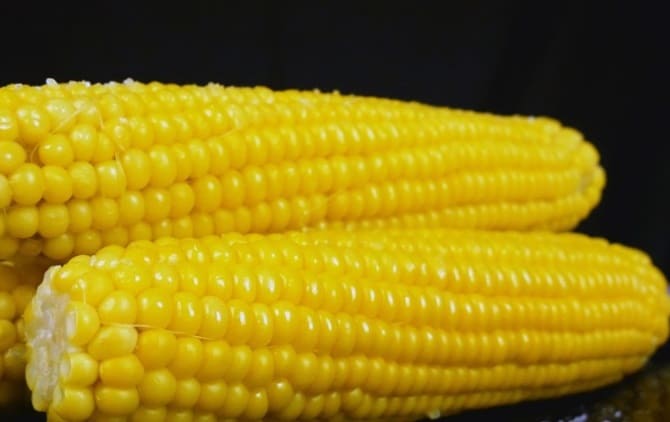
Corn: Very healthy – but not a vegetable
Corn is sometimes incorrectly referred to as a vegetable. The cobs are grain. Maize is one of the sweet grasses.
- There is more in the small, yellow corn kernels than you think: ten out of 100 grams of corn are dietary fiber – the intestines are happy about that and the dietary fiber also fills you up.
- Otherwise, 100 grams of corn bring 9 grams of protein, 4 grams of fat, and 1.5 grams of minerals. The rest is carbohydrates and lots of water – corn is 72 percent water. The carbohydrates consist mostly of glucose, fructose, and sucrose – that’s what makes the corn so wonderfully sweet.
- Eat corn and you’re in for a cocktail of vitamins. From vitamin A to vitamin B group B1, B2, B3, B5, and B6 to vitamin E and folic acid, everything is present in corn. The B vitamins in particular strengthen the nerves and immune system. Vitamin B3 also has a cholesterol-lowering effect.
- The proportion of minerals does not seem high, but there are a lot of important elements bundled together. In addition to a lot of potassium and phosphorus, corn contains a good portion of magnesium. Calcium, sodium, zinc, iron, and other trace minerals like manganese, copper, and selenium are also found in corn.
- But that’s not all. The flasks also contain important essential amino acids such as leucine, phenylalanine, isoleucine, valine, and threonine.
- Anyone suffering from celiac disease and following a gluten-free diet must avoid many types of grain. You can access corn without hesitation – it is gluten-free.
- Due to the high protein content, corn is a good meat substitute, for example for vegetarians. The high protein content is also food for the brain.
Corn: Canned, fresh, frozen, or popped
- Canned corn is certainly the most convenient to eat. However, most healthy ingredients are found in fresh or frozen corn
- If you love popcorn, you can grab it without pangs of conscience – provided you do it without sugar and butter. 100 grams of popcorn has less than 400 calories – and since the popped kernels don’t weigh much, 100 grams is a lot.
- By the way, cornstarch is a low-calorie alternative to flour to thicken soups, sauces, or stews.



Facebook Comments