 John Myers
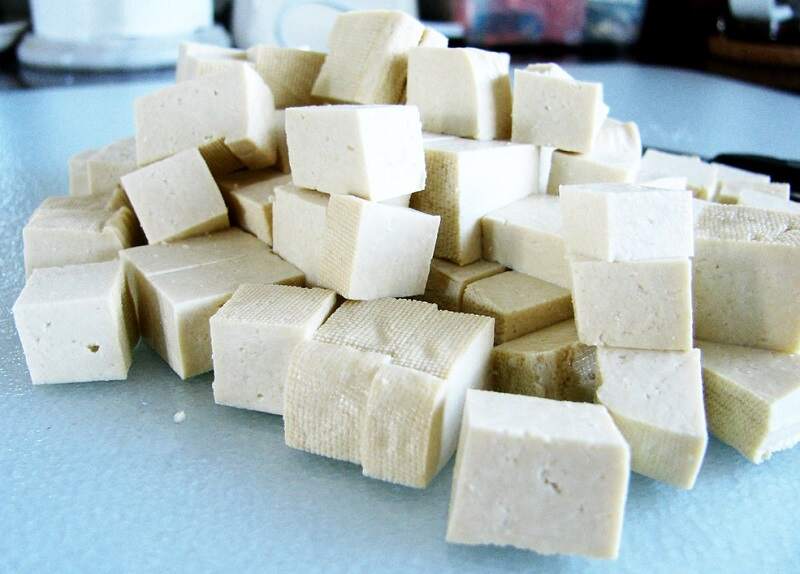
Soy products contain phytohormones, plant-based substances that are similar to the human sex hormone estrogen. What effects does this have on our body?
Soy products such as tofu sausages or soy milk are no longer exotic in Germany and can now be found in almost every supermarket. As a source of vegetable protein, they offer an alternative to classic meat and dairy products.
But: Soy products are controversial. This is also due to the so-called isoflavones, a group of plant substances that occur naturally in soybeans. Isoflavones are among the phytohormones and are similar to the human sex hormone estrogen. That is why they are also called phytoestrogens, i.e. plant estrogens.
A large number of studies have examined the effect isoflavones have on the human body – with varying results. The most important insights.
Where are phytohormones found?
Most plants contain phytohormones. These are substances that have a similar function in the plant as hormones do in us. They control processes such as growth or development, but are mostly harmless to humans.
Isoflavones, which are among the phytohormones, are also found in a large number of plants. In high concentrations, however, especially in soybeans , red clover , and in products in which these plants are processed. To differentiate them from other phytohormones, isoflavones are also referred to as phytoestrogens.
How do isoflavones activate processes in the human body?
Because isoflavones are similar in structure to human estrogen hormones, they can bind to the same receptors in the body. In areas of the body where these receptors are prominent, this can lead to processes that would otherwise be activated by estrogens. For example breast growth .
However, because isoflavones only resemble estrogens and are not identical to them, their binding to the receptor is significantly weaker . In addition, the phytohormones can also have a blocking effect in addition to an activating effect. In this case, they even inhibit the effect of the body’s own estrogen. How the isoflavones work depends both on the receptor type and on the number of receptors in the respective tissue and the concentration of endogenous estrogen.
Can I give my baby soy products?
Some mothers who do not breastfeed feed their babies with soy substitute milk – out of concern about lactose intolerance or milk allergies. However , both the Federal Institute for Risk Assessment and the Association of Pediatricians do not consider infant formula made from soy milk to be recommended .
US researchers have observed changes in the development of the uterus and vaginal tissue in baby girls fed soy products . Little boys showed an altered development of breast budding. Whether these changes persist when the children are older is not clear.
A January 2019 study found that women who were fed soy formula as children were more likely to have particularly painful periods in their teens. However, this study is a retrospective survey. The women were thus retrospectively asked about their experiences in adulthood. Due to this study structure, one cannot speak of a clear cause-effect relationship, because the influence of other factors on menstrual pain cannot be ruled out.
However, because several animal studies have also shown that soy products and isoflavones can have an effect on fertility, experts advise avoiding soy products in babies as far as possible for precautionary reasons .
Can isoflavones protect against breast cancer?
The study situation is contradictory. A 2014 meta-analysis produced mixed results. While isoflavones significantly reduced the risk of breast cancer in Asian women, only a marginal effect could be demonstrated for women in western countries.
According to the authors, this could be due to the fact that women in Asia and in the west consume isoflavones in different ways. In Asia, soy products like tofu are an integral part of many meals. In the west, on the other hand, women often take isoflavones via special preparations or dietary supplements.
Some animal studies, on the other hand, point in a completely opposite direction. In these studies, feeding isoflavones accelerated the growth of breast cancer cells.
What about isoflavones during menopause?
Dietary supplements with isoflavones are said to help with menopausal symptoms and are freely available in the self-help corner of drugstores. In a 2005 study, 80 percent of women surveyed said they would use phytohormones to reduce hot flashes and sweating. So far, however, there is no reliable evidence of a positive effect.
In addition, the active ingredient concentration of the preparations is sometimes unclear and too high. In general, care should be taken with dietary supplements. Interactions can occur when taking other medications .
What about the men?
Effects of isoflavones on the male body and male fertility have been demonstrated in various studies. They were often much smaller than in the female body. A January 2018 meta-study even showed that Asian men who eat lots of soy products had a lower risk of prostate cancer .
But the same applies here: These were observational studies and not controlled experiments . There is therefore no clear statement about cause and effect here either.
Which quantities are critical?
It is recommended for adults not to consume more than 1 mg of isoflavones per kilogram of body weight per day. For a woman who weighs 60 kilos, that is 60 mg a day. For comparison: tofu contains between 150-500 mg isoflavones per kilogram, depending on the type of production. A soy drink between 80-350 mg per kilogram.
There is no clear statement as to the maximum daily amount from which negative effects can occur due to the many contradictory studies. After studies on rats, the authors of a study from 2006 calculated a maximum value of 50 mg per kilogram of body weight per day for adults. Statistically, those who stay below this amount of isoflavones do not have to expect any negative effects. For a woman weighing 60 kilos, it would be a maximum of 3000 mg of isoflavones per day.
And now?
It is still too early for a final assessment of isoflavones and soy. While there is a problem of transferability to humans in the controlled animal studies, the epidemiological studies in humans can not make clear statements on cause and effect . These are observations only, not controlled experiments. The results obtained so far therefore only provide indications, some of which are very contradictory.
One thing is clear: a tofu schnitzel or a soy latte has never killed anyone. However, caution should be exercised when it comes to dietary supplements. A positive effect has not been proven. The diet of babies and toddlers should also only contain small amounts of soy products. If you have specific questions, we recommend talking to your trusted doctor.



Facebook Comments