 John Myers
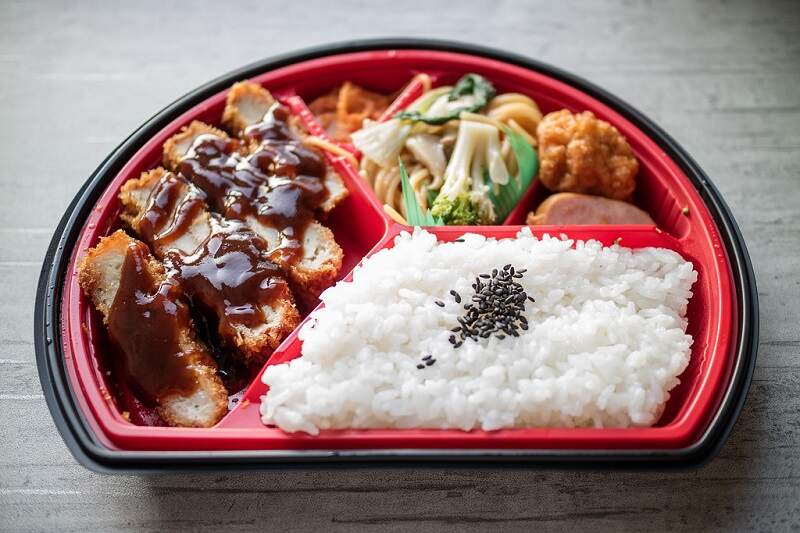
Ready meals seem to make us eat more than is healthy and necessary. Why are we so seduced by ready meals?
That’s what it’s about:
Ready food tempts us to eat more – and makes us fat
Whether clean eating, paleo or superfood – eating consciously, naturally and healthily is the trend. At the same time, however, more and more people are turning to ready meals: Every year, manufacturers generate more sales with highly processed foods such as frozen pizzas, snacks, meat extracts or lemonades.
In a 2019 laboratory study, researchers at the National Institutes of Health in the USA examined the influence of highly processed food on our eating habits. The effect was clear: groups of test subjects ate about 500 kcal more on a highly processed diet than on a diet of fresh food – and gained weight as a result. And this despite the fact that the foods were completely the same in terms of fat, sugar, salt, fiber and calories .
Means: Ready meals apparently tempt us to eat more. This laboratory study was the first of its kind and the sample was relatively small, but the results strongly suggest that we are eating more processed foods than we need to. Many non-laboratory studies also link ready meals to obesity.
So we should talk about it:
We know that ready-to-eat food is bad for us – but we still can’t let it go
One reason is practical: they’re cheap, durable, and convenient .
Whether at the gas station, at the kiosk or while waiting at the supermarket checkout – reaching for packaged salami or chocolate bars is done quickly. Even if your name is not Tim Mälzer, you only need a microwave to quickly conjure up a complete dish. And compared to fresh food, ready meals are usually not only significantly cheaper, they also last forever in the freezer or shrink-wrapped in the kitchen cupboard. So, in the stressful everyday life, highly-processed foods have some very enticing benefits.
But: We misjudge the nutritional value of the dishes
Our brains are trained to remember how much energy food has. For example, when we eat a strawberry, the sugar in the fruit enters the bloodstream. This releases a signal of the hormone dopamine in the striatum, the brain’s reward center. The brain remembers this signal. The next time we see or taste a strawberry, the same amount of dopamine will be released. So the brain unconsciously assesses the nutritional value of the strawberry before eating it and makes the decision to eat it – or not.
What works wonderfully for natural foods stumbles when it comes to highly processed foods: when the well-known strawberry suddenly consists of sugar pearls and is filled with gelatine, it triggers unclear dopamine signals in the brain . Ready meals, snack foods and confectionery contain nutrients in amounts and combinations not found in fresh foods. “In nature, for example, there is nothing that has a crust and is made of pure sugar on the inside,” explains Dr. Stefan Kabisch from the German Institute for Human Nutrition. The result: Our nutritional alarm system stumbles , we often eat too much.
In addition to sugars such as glucose or sucrose, many processed foods also contain low-calorie sweeteners such as aspartame. These sugar combinations do not exist in fresh food, they overwhelm us. For example, if a strawberry is artificially sweetened and twice as sweet as usual, then the taste and energy content based on experience do not go together. The transmission of the energy content to the brain and the further processing of the nutrients then no longer works properly: the body probably does not break down glucose properly and stores fat. We gain weight.
The consistency of the finished product also plays a role in Kabisch: “Nobody would probably eat ten mangoes. But the juice of ten mangoes and the nutrients to go with them are pretty easy to consume.”
Ready meals are addicting
Normally, when we eat, the hormones insulin and leptin increase in our body – at some point we are full. Normally, the satiety hormone leptin dampens the endorphins that make food tempting. But if we eat a greasy ready meal or a sugary chocolate cake, it releases so much dopamine and endorphins that the satiety hormone can no longer counteract it – the effect of insulin and leptin is suppressed . The dopamine response is stronger than natural foods, an overdose of gratification, so to speak. The result: the reward center in the brain pushes us to repeat the “kick” more and more often and even though we know that the food is harmful to us.
The genes also play a role here: Many overweight people have fewer dopamine receptors and can therefore not perceive dopamine in the brain as well as people of normal weight. You need more and stronger triggers to feel the same satisfaction. This cycle of dopamine kick and habituation is also found in drug or alcohol addiction.
At the same time, the term “comfort food” is quite appropriate: delicious food with flavor enhancers, fat and sugar counteracts stress symptoms. If we avoid these foods, we suffer from withdrawal symptoms. It is becoming increasingly difficult for us to do without the “comforters”.
We can and want to eat a lot of carbohydrates and fats
We usually don’t stop eating until we’re full. But how does the body know that it has had enough? According to the protein leverage hypothesis, neither fat nor sugar fills us up, just protein. We cannot produce some amino acids that are important for us, such as leucine and valine, so we have to absorb them from proteins. Our body therefore makes sure that we always eat enough, but not too much protein.
The problem here: Ready meals often contain a lot of added fats or carbohydrates such as sugar. In order to achieve our desired amount of protein, we eat a lot of fat and carbohydrates on the side. In the laboratory study, too, the test persons consumed very similar amounts of protein through freshly prepared food as through ready meals, but ate significantly more fat and carbohydrates with the ready meals – and therefore more calories.
In addition, we subconsciously find foods that contain both fat and carbohydrates , such as cake, frozen pizza and chocolate, particularly attractive . Our evolutionary Stone Age brain is to blame: For a long time, starvation was a much bigger problem for us than being overweight. So we are programmed, so to speak, to find high-calorie food great. Stress increases this craving for fat and carbohydrates.
That’s all?
Some of these mechanisms have not been unequivocally and fully researched in humans, it is probably a lot more complex. But many of the results so far suggest: Processed foods lead us to eat more and unhealthily than is good for us.
But:
The result is not just obesity
Fast food and the like also intervene in our lives on another level. If we are content with the snack from the supermarket checkout due to lack of time and eat it alone at the desk, we lose something that defines us as social beings: we no longer cook and eat together, but on the side, on the computer, in the car or in the Subway. We eat less consciously and therefore often eat too much.
Ready meals are also ecologically problematic: the manufacturers need a lot of cheap ingredients, which is why agriculture is increasingly relying on monocultures that are hostile to the ecosystem. Ready meals are also characterized by the fact that they are often packaged in a complex manner . The packaging waste and long transport routes pollute the environment and the climate.
And now?
Nutritional traffic light, ban, waiver?
The solution to the dilemma would actually be simple: do without fast food and ready meals, cook fresh yourself. But it’s not that easy. Anyone who informs themselves knows exactly that ready meals are unhealthy for us. But “tasty” is sometimes a louder argument than “healthy”.
Politicians have long thought about how to get us to eat healthier. With the “Nutri-Score”, a nutritional traffic light introduced in 2020, consumers should be able to see whether the product corresponds to a healthy diet by looking at the packaging of a food.
The big problem with this is that labeling remains voluntary for the industry. In addition, it is difficult for consumers to understand how the Nutri-Score is calculated. For example, if you only looked at the sugar content, fruits such as grapes, which contain a lot of fructose, would also get a bad report. If you only went by the fat content, you would also have to declare olive oil as unhealthy.
Distinguishing how highly processed foods are could be an alternative. The NOVA system, for example, defines four levels from unprocessed to highly processed foods. for dr Kabisch, however, the scheme is too rough, for example, it lists both white bread and wholemeal bread in level 3. “Unprocessed products are not necessarily healthier,” says Dr. Cabish. “You have to distinguish whether the ingredients are naturally present or artificially added . The decisive factor here is originality.”
Another starting point could be to add less sugar, fat and other unhealthy substances to highly processed foods . The approval is great: In the 2019 nutrition report of the Federal Ministry of Food and Agriculture, 84% of those surveyed are in favor of less sugar in finished products. In 2018, representatives of the food industry agreed with the Federal Minister of Food, Julia Klöckner, to reduce ingredients such as salt, sugar and fat in ready meals and to reduce the portions. However, this agreement is voluntary and is therefore criticized by associations such as Foodwatch.
So what can I do myself? We will not get rid of the inner Neanderthal in the foreseeable future. So it is important to come to terms with him, to understand him, but also to question him. What can help: Taking time for cooking and eating. Consciously dealing with food. And to treat yourself to a weaning phase from unhealthy things every now and then.


Facebook Comments