 John Myers
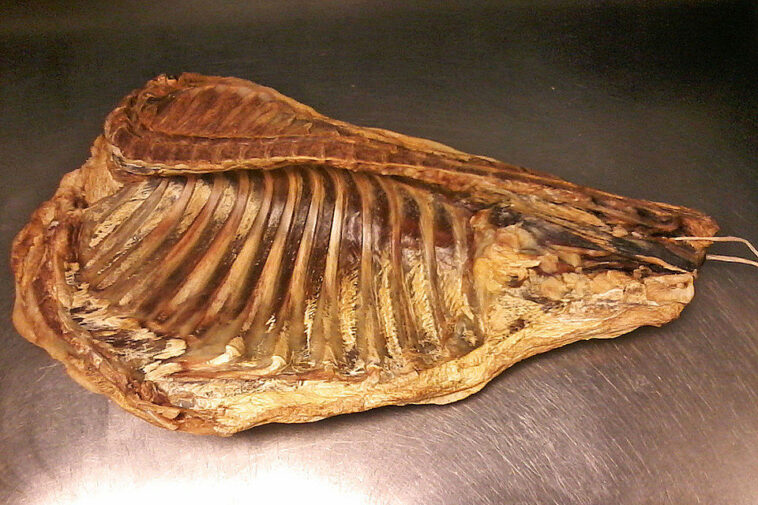
Ingredients for 1 servings:
- 1 lamb rib (whole side)
- 2 kg salt, coarse
Instructions
Working time approx. 30 minutes; Rest period approx. 45 days 12 hours; Cooking/baking time approx. 2 hours; Total time approx. 45 days 14 hours 30 minutes
Traditional Norwegian dish, Pinnekjøtt
1. Preparation of Pinnekjøtt: Rinse the lamb side/rib under cold water and dry, then place it in a tub or large casserole dish with the salt. Distribute the salt evenly and knead it in well, ensuring the salt is everywhere, even in the cracks. The lamb side should be generously coated with salt on all sides. Let it stand for about 3 days, preferably in the refrigerator, turning it once a day. Remove the excess salt and hang the rib on a string in a cool place for 6-8 weeks to dry. The string should be around the third rib; a screwdriver is a good tool for piercing a hole for the string. Check the rib every day for the first week to see if mold is forming. If it is, scrub it off with a brine (boil 200g of salt in 1 liter of water). Once dry, the meat can be cut lengthwise along the ribs. _________________ 2. Preparation of cooked pinnekjøtt: The pinnekjøtt, approx. 1.5 kg, must be soaked in water for about 12 hours, changing the water 1-2 times. After soaking, the meat will be soft again and excess salt will have been removed. The pinnekjøtt is not boiled, it is only cooked in steam. You can either use birch twigs from which the bark has been removed, or you can order ready-made birch sticks (birchwood sticks) online. The sticks are layered on top of each other in a large pot. The pinnekjøtt is then spread out on top and water is added, but the water should not touch the pinnekjøtt. It is cooked by steam alone. Cook with the lid on until the meat can be easily removed from the bones. This takes about 2-3 hours; add water occasionally to prevent the pot from boiling dry. If you like, you can brown the meat again in the oven shortly before serving (250 degrees Celsius for about 6 minutes). It goes best with kålrodstappe (swallow mash) and red cabbage, potatoes, and cranberries.


Facebook Comments