 John Myers
Ingredients for 1 servings:
- 160 g rye flour type 1150
- 160 ml water
Instructions
Working time approx. 30 minutes; Rest period approx. 9 days; Total time approx. 9 days 30 minutes
without yeast, after 9 days the sourdough is ready for use
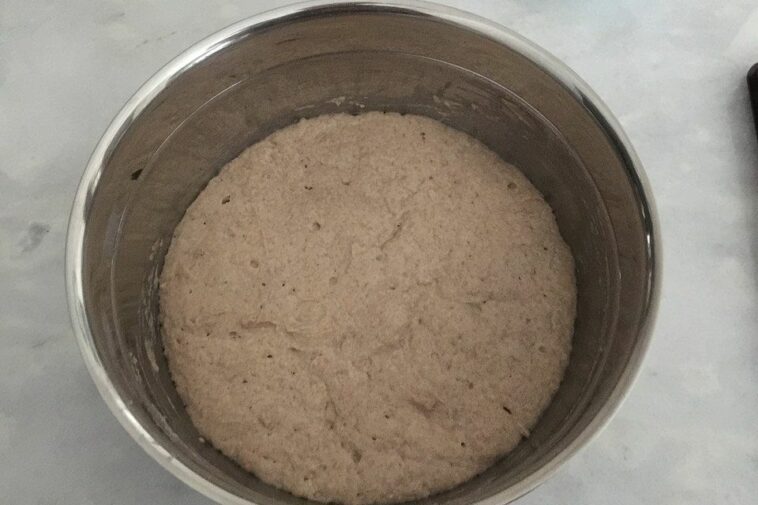
The entire production time is 8 days. Strict attention must be paid to hygiene. Glass containers are particularly suitable for fermentation. Mine lives in a jar with a plastic lid that doesn’t have a seal. The dough must be kept under a damp cloth throughout the entire time, at normal room temperature and, if possible, away from drafts. But definitely not airtight. This sourdough needs air to breathe, otherwise it will spoil. First day: Mix 20 g of rye flour and 20 ml of water thoroughly. Cover the jar with the damp cloth. Second day: Nothing is visible yet. Stir the mixture and cover again with a damp cloth. Third day: Nothing seems to have happened yet. Stir the mixture again and cover with the damp cloth. Fourth day: Nothing unusual is visible. Weigh 20 g of rye flour into a clean jar. Stir 20 ml of water thoroughly into the “old sourdough,” then stir this liquid into the fresh flour. Cover the jar with the damp cloth again. Fifth day: You can slowly see that “something is happening.” Stir and cover again with the damp cloth. Sixth day: Something is happening. Weigh another 20 g of rye flour into another jar, mix the “old sourdough” with 20 ml of water, and add this mixture back to the fresh flour and mix well. Cover with the damp cloth. Seventh day: It should now begin to smell wonderfully pleasantly sour, and bubbles should be visible in the mixture. Stir well again and cover with the damp cloth. Eighth day: This is the big day before the first pure sourdough bread. In the evening, put 100 g of wholemeal rye flour type 1150 into a large bowl. Add 100–120 ml of water to the fermenting dough and mix well. Then combine this mixture with the fresh rye flour. Cover the bowl again with a damp cloth and let it stand overnight. Ninth day: In the morning, the sourdough is ready for its first use. Take 100 g of this dough and store it in a jar in the refrigerator for its next use. Make sure it is not sealed airtight. The remaining amount can be used for baking. This sourdough must be fed at least once a week to prevent it from “dying.” Weigh out 100 g of rye flour, stir 100 ml of water into the hungry sourdough, and mix everything together. Cover with a damp cloth to prevent the top from drying out. If you refrigerate it immediately after mixing, it can even last a day longer. The principle is to keep the dough separate. On the one hand, the sourdough, which receives its 100 g of flour and 100 g of water every week. After that, 100 g of finished sourdough can be stored. On the other hand, 200 g of the sourdough starter can be used within a week. This culture is so vigorous that you can do without yeast altogether, making it suitable for people with yeast intolerances. I bake my breads with only flour, water, and salt.



Facebook Comments