 John Myers
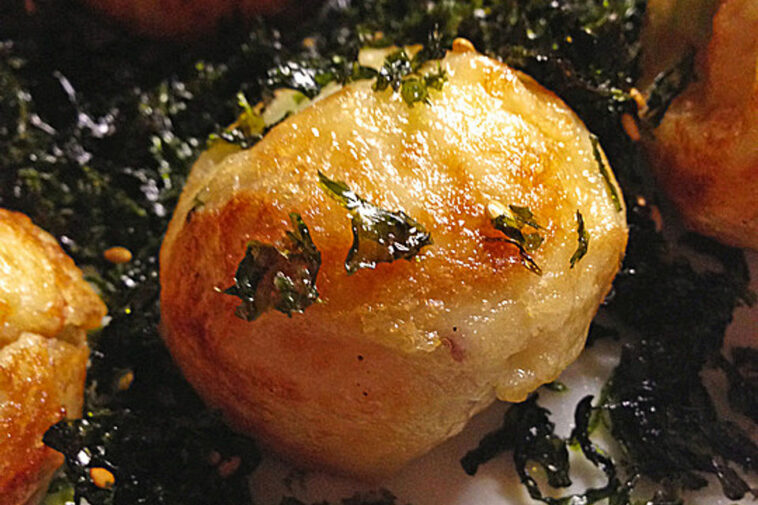
Ingredients for 3 servings:
- 100 g flour
- 300 ml dashi
- 1 egg(s)
- 80 g octopus, ready to cook or frozen
- n. B. Salt
- n. B. water
- 4 tbsp dough (agedama), if desired
- 1 spring onion(s)
- n. B. Sauce (Sōsu – Takoyaki Sauce or Okonomiyaki)
- e.g. mayonnaise (Japanese, if available)
- Algae (Aonori)
- Tuna flakes (Katsuobushi), possibly
- Oil for the pan
Instructions
Working time approx. 1 hour; Total time approx. 1 hour
If using frozen octopus, thaw it in a bowl in the refrigerator overnight. Hold the octopus’s head in one hand, letting the tentacles hang down. Using a sharp knife, cut off the tentacles just below the eyes. Place the octopus in a bowl and rub it all over with salt to remove sand and dirt, while also tenderizing it. Be careful if using an octopus that has not had its beak removed. Bring a large amount of water to a boil over medium heat. (The water should only be simmering to prevent the octopus from becoming tough.) Place the octopus in the water, bring to a boil briefly, then reduce the heat slightly and let the octopus steep for 10 minutes. Remove the octopus from the hot water. The cooking should have turned it a deep red, and the tentacles should be very curled. Drain it in a sieve and let it cool. Once it has cooled, cut off the tentacles around the beak. Discard the beak. The tentacles continue processing. Any octopus you don’t need right away freezes well. It will keep for about 4 weeks. Cut the spring onion into thin rings and the octopus arms into 16 pieces. Place the pan on the hotplate over medium-high heat. While the pan is heating, mix the flour, egg, and cold(!) dashi in a mixing bowl. Brush the hot pan with oil, especially in the holes, but also in the spaces between them. Then fill each hole halfway with batter. It’s okay if some batter ends up in the gaps. Now quickly add the octopus, spring onion, and agedama to each hole. Fill the holes and spread the remaining batter between the holes. We’ll need the batter between the holes right away so the takoyaki are round and not half-spheres. When the batter between the holes has almost set, use chopsticks or skewers to fold it onto the nearest hole, gradually clearing the gaps and creating small mounds. Now you need to turn the takoyaki over with chopsticks or skewers. Wait a minute, then turn it over again. Remove the takoyaki from the pan—the best way to do this is to simply pierce the hole with a skewer and lift the takoyaki out of the pan—and place it on a plate. Decorate with sosu, mayonnaise, aonori, and katsuobushi and serve immediately. Another little tip: I do it a little differently when frying the takoyaki. Instead of pouring batter over the gaps, I first fill the hollows with batter and wait a moment. When they start to loosen, I tilt them in the pan and add more batter. I do this until they are really nice little balls. There are special pans for Takoyaki available in specialist shops.



Facebook Comments