 John Myers
Ingredients for 6 servings:
- 1 kg pork or beef
- 300 g red pointed peppers
- 400 g onion(s)
- 120 g celeriac
- 300 g tomatoes, pureed
- 50 g tomato paste
- 3 garlic cloves
- 10 ml lovage
- 20 ml paprika powder, hot
- 10 ml oregano
- 10 ml rosemary
- 15 ml thyme
- 3 carrots
- 6 g salt
- Water
- oil
Instructions
Working time approx. 30 minutes; Cooking/baking time approx. 2 hours; Total time approx. 2 hours 30 minutes
super aromatic
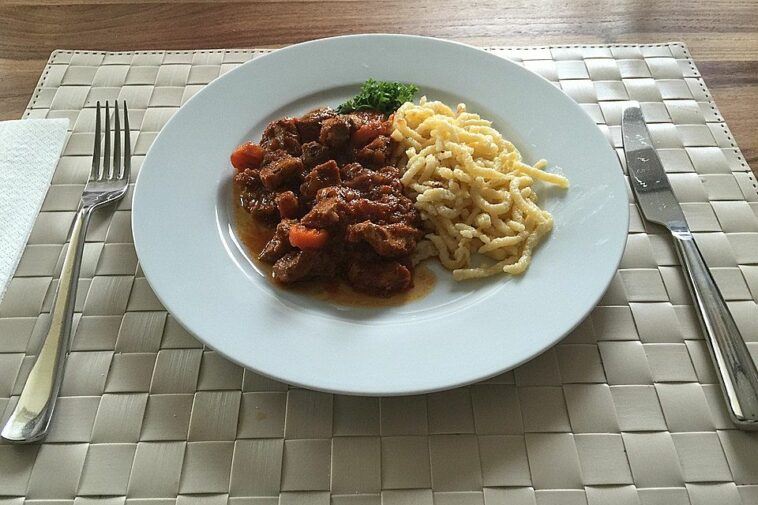
I usually measure spices and herbs in milliliters. That’s the best way to measure them. If you have small children at home, just look in your medicine cabinet for any juices; they always have measuring caps with different milliliter measurements. These are ideal for use in the kitchen. Cut the meat into equal-sized pieces and set aside. Peel the onions and cut them into small cubes. Add them to a pan with a little oil and let them brown well; this will give them a roasted flavor. Meanwhile, weigh or measure the remaining ingredients and set them aside. I usually cut the celery into two large pieces, which I remove at the end of the cooking time. By then, it will have imparted its flavor to the sauce, and I don’t want to eat it. Pointed peppers have a wonderful flavor and are much better for cooking than round ones. They’re more suitable for salads. When cooked, round ones have little flavor and an unpleasant aftertaste. When the onions have a nice dark color, deglaze with a little water and set aside. Heat some oil in a sufficiently large pot and brown the meat. Then add all the ingredients, except the bell pepper, to the meat. Add a little water so everything can braise well without burning; not too much, or it will turn into a soup. Stir occasionally. The bell pepper should only be added 30 minutes before the end of the cooking time, otherwise it will lose its flavor. If you’re a super cook, you can blanch it, place it in ice water, peel off the skin, and dice it finely. I simply remove the seeds and stem and cut the bell pepper into small pieces, which I then put in a blender. When it’s time to add the bell pepper to the goulash, I take some of the sauce, add it to the bell pepper in the blender, and let the blender process everything into a puree. I then simply add this to the goulash. If you want to serve the goulash as a stew, you can add finely chopped potatoes and perhaps green beans – also 30 minutes before the end of the cooking time. Whatever the kitchen has to offer. The goal is to do without any thickeners like flour or starch. Therefore, if necessary, let it reduce with the lid open for the last half hour if the sauce is too thin. Then, towards the end of the cooking time, stir it again with a whisk, but without tearing the meat apart. This gives it a bit more binding. If you prefer to keep the meat and side dish separate, you can serve pretty much anything with it: potatoes, rice, noodles, dumplings. Everything goes well with goulash. Now add a nice fresh mixed salad and you have the perfect meal on the table. Notes: If the goulash isn’t salty enough for you, just try increasing the amount of lovage (also known as Maggi herb) a bit next time. For pork goulash, I prefer neck, and if neck isn’t available, I’ll also use shoulder. What you shouldn’t use is the “ham goulash” often offered in stores. Ham is more suitable for schnitzels or other quickly fried dishes. If you cook ham for a long time, it will just become extremely dry. Pork is uncomplicated because it doesn’t require further aging. I usually vacuum-seal beef and let it age for three weeks at 2°C. For beef goulash, Hesse is the first choice. You can also use breast (soup meat). Because this recipe uses so many herbs, spices, and vegetables, you need much less salt. You might be confused by the amount of hot paprika. Due to the long cooking time (1.5 hours for pork, 2 hours for beef at medium heat), the paprika loses most of its heat and develops its full flavor. Just give it a try. Since goulash is quite a lot of work, I always cook 8-10 portions and simply freeze the uneaten portions. You can calculate with about 160 g of meat per portion.


Facebook Comments