 John Myers
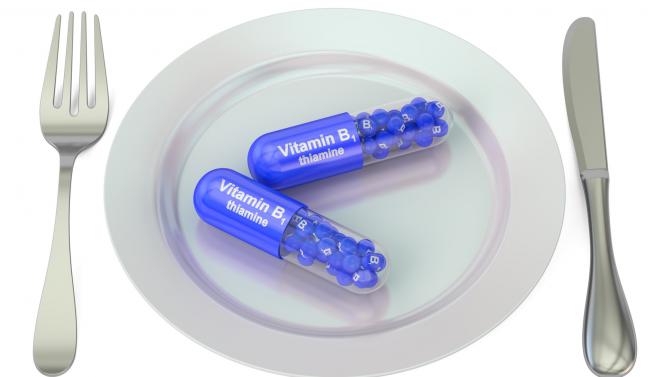
Vitamin B1 must be supplied regularly with food, the body cannot store large amounts.
The essentials in brief:
- The vitamin B1 supply in Germany is sufficient – a dietary supplement is usually not necessary.
- Vitamin B1 does not help against neuropathic pain.
- An undersupply occurs above all in the case of alcohol abuse or diseases of the gastrointestinal tract.
- Vitamin B1 is contained in all animal and vegetable foods.
- Whole grain products, legumes and pork are particularly rich in vitamin B1.
What is behind the advertising for thiamine (vitamin B1) products?
Vitamin B1 is often advertised as the mood, nerve or “good mood” vitamin. In fact, thiamine is an essential vitamin that the body relies on. Because: Thiamine not only plays an important role in the nervous system , but is also involved in energy metabolism and heart health.
According to the Health Claims Regulation (HCVO) , the following claims are permitted for thiamine (vitamin B1):
- Thiamine contributes to normal energy-yielding metabolism
- Thiamine contributes to normal mental function
- Thiamine contributes to the normal functioning of the nervous system
- Thiamine contributes to normal heart function
With these scientifically proven statements, dietary supplements may be advertised that contain at least 0.17 mg thiamine per daily dose (15% of the reference value). However, it is important to pay attention to the exact wording: It is only about maintaining normal bodily functions and not about an additional increase in performance.
Again and again one finds information on the Internet that thiamine or the related benfotiamine should relieve nerve pain (neuropathic pain). In fact, according to the German Society for Neurology (DGN), vitamin B1 helps just as little as vitamin E.
What should I look out for when using thiamin (vitamin B1)?
Undesirable health effects from a high intake of vitamin B1 from food supplements are not known. Excess thiamine is excreted in the urine. Therefore, the Federal Institute for Risk Assessment has refrained from setting a maximum level for thiamine in food supplements and also in fortified foods.
These vitamin compounds are approved for thiamine in food supplements in Germany and other EU countries in accordance with EU Directive 2002/46/EC, Annex II (version dated March 20, 2021) :
- Thiaminhydrochlorid
- Thiaminmononitrat
- Thiaminmonophosphatchlorid
- Thiaminpyrophosphatchlorid
You can also find products containing benfotiamine on the internet. However, benfotiamine is a vitamin B1 compound that is only approved in pharmaceuticals.
What does the body need thiamine (vitamin B1) for?
Thiamine has many functions in the body. It is of crucial importance in the production of energy from carbohydrates and proteins. In addition, as a phosphate donor, it is involved in the transmission of stimuli and thus plays an important role in the nervous system.
A permanent thiamine deficiency leads to the well-known Beri-Beri disease. This still occurs today in countries where the diet is one-sided and white rice is the staple food. Because the vitamin is in the outer layer of grain and rice grains and is therefore lost when the rice is peeled. The deficiency symptoms can mainly be sorted into the categories “damage to the cardiovascular system” and “disorders of the nervous system”. They comment e.g. in muscle weakness, numbness in arms and legs, cardiac insufficiency up to heart failure.
In Europe, however, beri-beri does not play a role. However, there are risk groups in Germany. These include: chronic alcoholics, people with certain gastrointestinal or liver conditions, and women with extreme morning sickness. Breastfed children whose mothers suffer from a thiamine deficiency (due to vomiting during pregnancy, for example) are also at risk. Supplementation after medical consultation is recommended here.
Can I cover my daily requirement through food?
On average, men and women are above the recommended daily intake for vitamin B1. Although a third of the female population does not achieve this, that does not mean that there is a shortage. The daily intake recommendations take into account the different metabolic conditions of people and the different eating habits, for example very rich in carbohydrates (requires more vitamin B1) with a safety margin of 20%. It was only through meaningful diagnostic methods (biomarkers) such as the thiamine diphosphate concentration in the red blood cells or the thiamine excretion in the urine that the statement could be made that the German population generally has an adequate supply of vitamin B1.
The amount of the recommended daily intake of thiamine depends on the daily energy (calorie) consumption. Since men are usually taller and have more muscles, the vitamin B1 recommendation is higher at 1.2 mg thiamine/day than for women at 1.0 mg thiamine/day. Older people (65 years and older) have a slightly lower requirement (men 1.1 mg, women 1.0 mg), younger people (15-19 years) need more due to their active everyday life and their high metabolic performance during growth (boys 1.4 mg/ girls 1.1 mg).
The storage capacity in the human body, especially in the blood, liver, kidneys, brain and muscles, is to be regarded as low for thiamine at 25-30 mg. The biological half-life is also very short at 9 to 18 days. Therefore, a regular supply is necessary.
Thiamine is found in all plant and animal foods. A varied diet ensures adequate thiamine supply. Lean meat (particularly pork) is particularly rich in thiamine. Since whole grains (especially oat flakes) and brown rice contain significantly more nutrients – including vitamin B1 – than lighter types of flour/rice, these are to be preferred. Legumes (peas), sunflower seeds, peanuts, tuna, plaice, potatoes and much more are also rich in thiamine .
Vitamin B1 is sensitive to heat, UV rays and oxygen. Since it is also one of the water-soluble substances, around 30% of thiamine is lost when food is cooked. The content in food can therefore be influenced by storage and preparation.
Our tips:
A balanced diet usually provides us with sufficient thiamin (vitamin B1).
Since vitamins and minerals are in the surface layers of the grain, look out for the term “whole grain” when purchasing grain and grain products. Don’t let terms like ” black bread” or “grain bread” fool you.
Wholemeal rice can be recognized by the term “brown rice”. A good alternative to brown rice is the so-called “parboiled rice”. This was steam-treated before it was husked, with some of the vitamins and minerals being pressed into the interior of the grain of rice and therefore still contained in the grain of rice after it was husked.


Facebook Comments