 John Myers
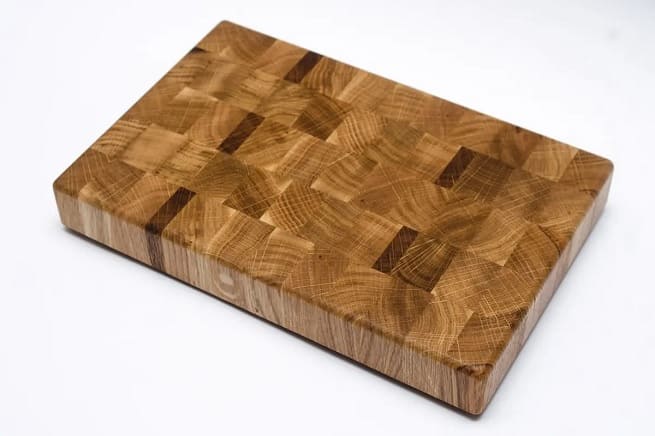
Whether a cutting board is made of wood or plastic plays a subordinate role in terms of hygiene. It is important that the cutting boards are discarded and replaced as soon as they become badly scratched. Food residues can get stuck in the grooves of both wooden and plastic boards. Meat juices and the like are then no longer completely removed during cleaning so that harmful germs can form and be transferred to other foods.
An ideal cutting board, therefore, consists of a material that is as scratch-resistant as possible. Stone and glass are quite scratch-resistant, but still not recommended. The material is so hard that it can dull the blades of your kitchen knives. In the long run, it is cheaper to replace a scratched plastic or wooden chopping board than a good kitchen knife.
On the other hand, cutting boards made of robust plastic High-Density Polyethylene (HDPE) are recommended. Hard cherry or maple wood is also more durable and scratch-resistant than other materials. The cutting board should also be at least two centimeters thick so that it does not deform easily. The softwood of the pine, on the other hand, is considered to be naturally germ-inhibiting due to certain tannic acids. However, if the cutting boards are badly scratched at some point, the following also applies to these materials: Replace the cutting boards in favor of hygiene.
In general, you should have at least two cutting boards for different foods. Chop up raw meat and poultry as well as raw fish on a cutting board. Another board is used to cut raw vegetables, vegetables, and bread. If you favor wooden boards, keep in mind that they absorb and retain food smells and colors more easily. In this case, you should have a third board in the kitchen. Chop up strong-smelling or coloring foods such as onions or beetroot.
For the longest possible durability, you should regularly impregnate wooden cutting boards with a little linseed oil so that they do not absorb moisture so easily. Otherwise they quickly crack due to moisture and are then unusable. Therefore, they must not be cleaned in the dishwasher. After washing them by hand, the wooden boards need to air dry completely before putting them away. Speaking of wood and nature: We recommend our great tips for handicrafts with natural materials to our DIY fans. In this way, you might be able to create something beautiful yourself from a worn-out board.
Plastic cutting boards, on the other hand, can be easily cleaned in the dishwasher and do not have to be impregnated. However, hand cleaning for cutting boards is not necessarily worse than cleaning in the dishwasher in terms of hygiene. However, the dishwasher can eliminate odors better than hand washing.


Facebook Comments