 John Myers
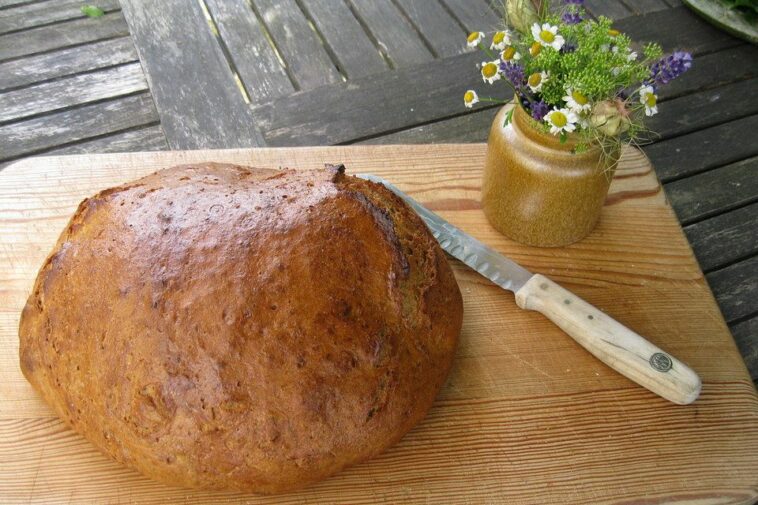
Ingredients for 1 servings:
- 10 g yeast
- 75 g sourdough
- 520 ml water, cold
- 1 tsp honey
- 400 g wheat flour type 405
- 200 g wheat flour type 1050
- 150 g rye flour type 1150
- 15 g salt
Instructions
Working time approx. 35 minutes; Rest time approx. 12 hours 20 minutes; Cooking/baking time approx. 50 minutes; Total time approx. 13 hours 45 minutes
Typical juicy, crusty G’netztes
Dissolve the yeast and sourdough in a little water. Add the flour, rye flour, salt, and honey and mix for 7 minutes until a smooth dough forms. The water quantity is the maximum. I would initially add 350-400 ml (depending on the composition of the sourdough) and add more if necessary (max. 520 ml) until the dough is very sticky after 6 minutes of mixing. It should be a “sticky lump” so that it is moist enough, but also retains its round shape during baking and is not too moist and spreads into a flat cake. Now let the dough rise for 20 minutes, then fold the dough from the sides of the bowl into the center. Let rise for another 20 minutes. Repeat the folding process two more times. The dough will be soft and somewhat sticky (at 520 ml of water, the dough will be really sticky). Alternatively: – 2 to 3 times in the steamer (Automatic -> Special -> Let yeast prove (20 min)) – fold in from the edges after each process Now let the dough prove overnight at cool room temperature (at 15 °C – 16 °C, e.g. in the cellar). The dough should have at least doubled in size (takes 8 – 12 hours depending on the room temperature). Alternatively, put the dough in the refrigerator for 24 hours. (Warmer is quicker, but this step should not be shortened for a more digestible result.) The next day, preheat the oven to 250 °C with a baking tray. Thoroughly moisten a small 2 liter (metal) bowl. It is okay if there is a little water on the bottom. Place the dough in the bowl using a wet spatula or wet hands and fold it from the sides of the bowl into the middle again to create a little tension. Turn the bread out of the bowl directly onto the hot baking tray. Bake for a total of 40 – 55 minutes at 240 °C. After 25-20 minutes, reduce the temperature to 220°C. (If using a climate cooker, add a heat-resistant container and 4-5 ice cubes to the oven.) Alternatively: – Climate cook (heat up) to 240°C; 2-3 bursts of steam; – 1st burst of steam after placing the bread in the oven, 2nd burst of steam after 10 minutes, 3rd burst of steam 5 minutes before removing it from the oven. 10 minutes before the end of baking, brush the bread with water to achieve a shiny crust. After the bread comes out of the oven, you can immediately brush it with water again using a wet brush. Notes: A long fermentation (either at 15°C or in the refrigerator) and the sourdough ensure a good aroma in this bread. The sourdough is added unfed and does not provide any leavening, but rather a very good flavor. The bread can also be baked without the sourdough, but you will have to make slight compromises in taste. (I personally use store-bought sourdough—you can also make your own and find several recipes here.) The maximum amount of water specified for the dough is the maximum. Less water results in a soft dough that is still manageable for advanced beginners. However, it is possible that the dough will crack slightly on one side during baking. This is purely a cosmetic defect. With 560 ml of water, handling becomes more difficult, as the dough is more sticky and even flows, but in return, the moistened bread takes on its typical round shape. The shape does not change the taste, however, which is excellent in both versions! The crust of this bread is finely crispy and opens up beautifully as it cools; the crumb is soft and fine to medium-pored. The inside is beautifully moist, and the outside has an audible crunch. The bread is best stored unwrapped (standing on the cut side) for up to 3 days.



Facebook Comments