 John Myers
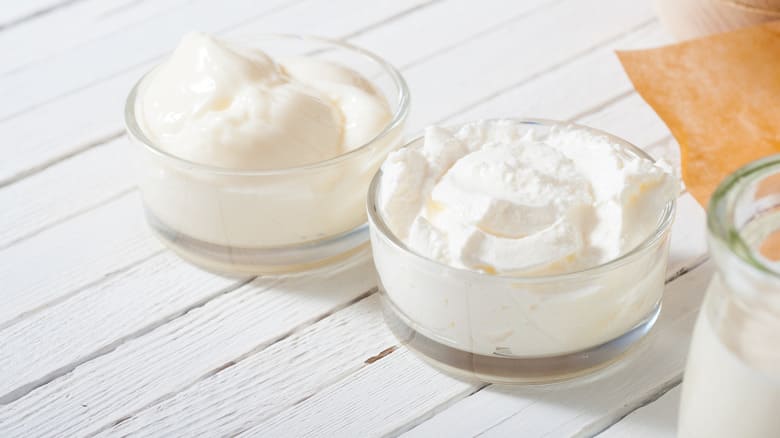
The big difference between sour cream and crème fraîche is the fat content on the one hand and the taste on the other. The former tastes a little milder and normally contains around 20 to 24 percent fat, although the fat content can also rise to 40 percent. Crème fraîche is also in this range (30 to 40 percent). What both products have in common is the sour taste nuance. This in turn is due to the same basis: both sour cream and crème fraîche are sour cream products that, thanks to their high-fat content, do not flake when heated. This is also the difference between sour cream, crème fraîche, and sour cream. The latter is made from sweet cream acidified by lactic bacteria. Since its fat content starts at 10 percent, but normally never exceeds 28 percent, it flocculates when heated. Sour cream is therefore not suitable as a substitute for sour cream or crème fraîche in hot dishes.
The difference between sour cream and crème fraîche: What is sour cream and what does it go with?
Like crème fraîche, sour cream can be used in many different ways. Both are suitable for both cold and warm dishes. On the one hand, you can use them to mix dips or creams, on the other hand, sour milk products can be used to thicken sauces. Keep in mind, however, that while you avoid the risk of lumping flour, you are cooking with more calories at the same time. Use sour cream to thicken, and never put it directly into boiling liquid. Otherwise, despite its high-fat content, it could still flocculate. At the same time, the slightly sour taste also goes wonderfully with cakes, tarts, and fruit. For example, try our cheesecake with blueberries, the cream of which you mix with crème fraîche, among other things. Incidentally, you can also use them in cold dishes at any time as a somewhat richer sour cream substitute.



Facebook Comments