 John Myers
Ingredients for 4 servings:
- 1 ½ kg kale, fresh, whole leaves, unchopped
- 1 bottle of red wine, strong, also semi-dry
- 4 large onions, sweet onions (Oignon doux) are also good, but not vegetable onions
- ½ cup oat groats
- 3 garlic cloves
- 3 large figs, dried, or 10 small
- 2 sausages (Pinkel), preferably smoked meat Pinkel or Oldenburger Pinkel
- 4 small sausages (cooked sausages), or 2 large ones, also very good made from beef
- 600 g smoked pork, preferably slightly marbled neck
- 2 tsp mustard
- butter
- Sugar
- Pepper, white, from the mill
Instructions
Working time approx. 1 hour; Cooking/baking time approx. 3 hours 30 minutes; Total time approx. 4 hours 30 minutes
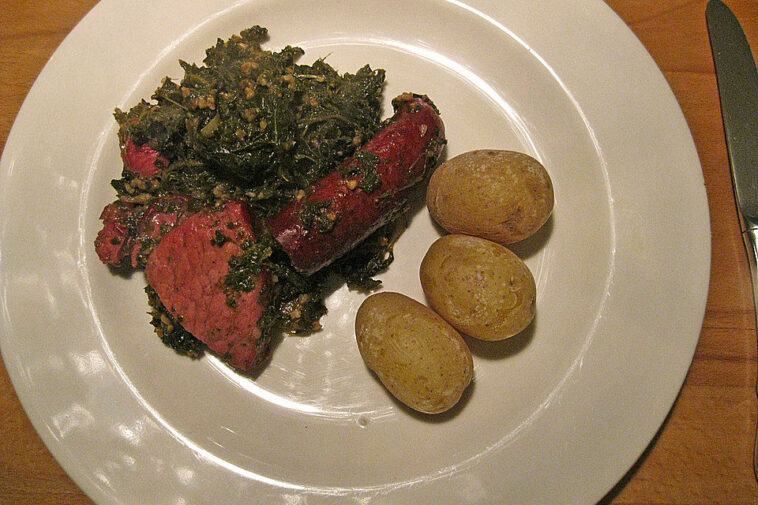
“Kohl und Pinkel” – with smoked pork and sausage, also known in the north as brown cabbage or Oldenburg palm
1.5 kilos of cabbage with the stem yields approximately 1 kilo of edible cabbage. Wash the cabbage thoroughly. Pull out the stalks; do not cut or chop the remaining leaves. Simmer the cabbage in 3/4 of the red wine with the lid closed for approximately 2 hours. Sprinkle in the porridge and simmer for another half hour. Meanwhile, chop the onions, half of them quite finely and the other half quite large, e.g., quarters. Add the smaller ones to the simmering cabbage early on. Remove the stems from the figs and chop them quite finely; the smaller ones are better for this because they are juicier. Remove the bones from the smoked pork, remove any remaining meat from the bones, and use them. Cut the meat crosswise into approximately 2 cm thick slices. Discard any overly fatty or stringy parts. Dice the marbled parts, leaving the nicer pieces whole—one for each guest. Melt a little butter in the pan, season the smoked pork with pepper, and sear only the diced pieces until very hot. Remove the meat. Sauté the peeled garlic cloves, crushed with the blade of a chef’s knife, the figs, and the onions over low heat for a few minutes until the onions are translucent. Remove the Pinkelwurst from the casing, cut into pieces, and add. Add the already fried smoked pork cubes, pour in a little red wine, and simmer for 10-15 minutes over low heat. Then add the contents of the pan to the cabbage, which has now been cooked for 2.5 hours. Deglaze the pan juices with the remaining red wine and add to the cabbage. Pierce the sausages several times with a fork and add them, as well as the larger pieces of smoked pork. Add the mustard. Simmer for another hour. Be careful! When the porridge starts to thicken, stir it gently regularly. It’s best to keep the sausages and meat on the side of the pot and keep them whole! Remove the lid if necessary. At the end of the cooking time, there should be almost no liquid left. Season to taste with sugar and pepper if necessary; do not add any extra salt. As a cured meat, Kasseler is very heavily salted, which is perfectly adequate for the cabbage and vegetables, as they are cooked together. Boiled waxy potatoes on a preheated plate are fine, or jacket potatoes, but not fried potatoes – the cabbage plays the main role here. A full-bodied, dry red wine makes an excellent accompaniment. In the finished dish, the leaves should still be visible, the liquid, especially from the wine, should have completely evaporated or been absorbed, the meat and sausage should remain intact (which is only possible to a limited extent with marbled neck meat, but neck is better suited to this dish than a chop from the rib or shoulder), the cabbage flavor should be fresh and sweetly rounded but not overly sweet, the residual spiciness from the pepper and mustard should be minimal, and the red wine and garlic should be barely noticeable. Although it is a stew, the result should not be salty, fatty, or mushy; for precisely these reasons, some people dislike this northern German specialty.


Facebook Comments