 John Myers
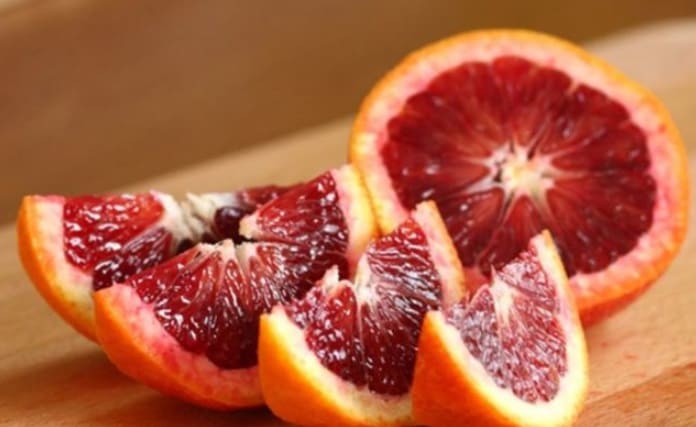
The color of the blood orange comes from plant substances
Certain substances that the plant produces are responsible for the characteristic coloring of the blood orange. Temperature differences also play an important role.
- Blood oranges discolor due to high-temperature differences. During the day it must be significantly warmer than at night, the difference is around 12 to 14°C. Otherwise, the plant develops a “normal” orange color.
- Responsible for this are secondary plant substances (not essential for the plant itself), which are very common in plants in general but rare in citrus fruits: the so-called anthocyanins.
- Anthocyanins are found in most plants. You give e.g. B. flowers or fruits have a distinctive color that moves in the spectrum of red, blue, and violet.
- The function of the anthocyanins is not just limited to a conspicuous coloration, which z. B. Pollinators react. The substances also protect individual cells from the outside.
- Different blood orange varieties can have different levels of anthocyanins. This influences (in addition to the temperature fluctuations) how intense the color of the fruit turns out to be.



Facebook Comments