 John Myers
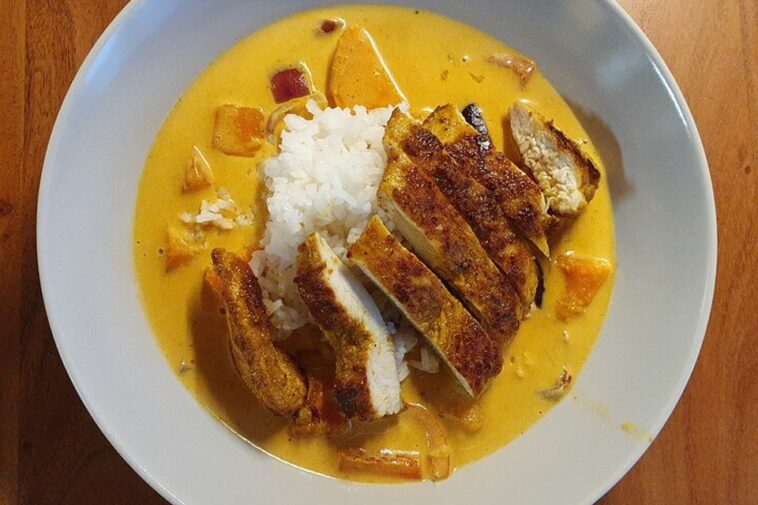
Ingredients for 4 servings:
- ½ Hokkaido pumpkin(s)
- ½ sweet potato(s)
- 1 m.-sized bell pepper(s), red or yellow
- 3 spring onions
- 2 cloves garlic, to taste
- 1 stalk(s) lemongrass
- 1 piece(s) ginger root, approx. thumb-sized
- 1 bunch of coriander, fresh
- 1 bunch of Thai basil, fresh
- 1 lime(s), to taste
- 2 tbsp red curry paste
- 1 tbsp yellow curry paste
- 1 tbsp curry paste, green
- 800 ml coconut milk
- 150 ml chicken broth
- some water
- 2 tbsp fish sauce
- 2 tbsp soy sauce
- 1 tsp palm sugar
- Thai chili pepper(s), to taste
- 2 tbsp peanuts, roasted
- some peanut oil
- 800 g chicken breast fillet(s)
- 1 tsp, heaped black pepper, ground
- 2 tsp salt
- 1 tsp coriander powder
- 1 tsp ginger powder
- 2 tsp curry powder
- ½ tsp garlic powder
- ½ tsp cayenne pepper or chili powder
- some peanut oil
- 400 g basmati rice
- 2 small shallots
- 1.2 liters of vegetable broth
- some peanut oil
Instructions
Working time approx. 30 minutes; Cooking/baking time approx. 45 minutes; Total time approx. 1 hour 15 minutes
also delicious without meat
This is a curry in which the ingredients are not only cooked in the traditional way with the curry, but are also fried beforehand for additional roasted flavors. This is certainly far from the original recipe, but in my opinion it tastes great. You will need a large wok/large casserole dish with a lid, as well as a frying pan and a smaller (saucepan) with a lid. First things first: prepare the mise en place. Cut off the squash stem to give it a surface to rest on. Then carefully halve the squash with a large kitchen knife and scrape out the fibers and seeds with a large spoon. Cut the squash halves into slices about 1-2 cm wide, then trim off the rind with a knife. Cut the peeled slices into even-sized cubes. Peel the sweet potato, onion, and carrots, wash the carrots, and then cut everything into equal-sized pieces like the squash. Wash the peppers, remove the seeds, and cut them into equal-sized pieces like the other vegetables. Remove any white pith, as otherwise they will taste bitter. Remove and wash the roots of the spring onions. Cut the white and light green, firm parts of the spring onions into similarly sized pieces to the other vegetables. Set the dark green part aside for later. Peel the ginger (it’s best to scrape off the skin with a small spoon), then chop it into thin slices of about 1 cm. Peel the garlic cloves and also slice them finely. Meanwhile, mix the dry rub for the chicken. Combine the spices in a bowl and stir until they are evenly distributed. Remove the chicken from the refrigerator so that it is slightly closer to room temperature. Rinse under cold water, then pat dry with a kitchen towel. Spread the dry rub evenly on one side and rub in, then flip and repeat the process. Prepare the ingredients for the rice as well: Weigh out 200 g of basmati rice and wash it in a sieve under cold water until no more milky water drips off. Then let it stand to drain. Chop the shallot into very fine cubes (similar in size to the rice grains). Prepare 600 ml of vegetable stock (ideally homemade, but chicken stock also works). In a large wok or sauté pan (ideally non-stick), heat a little peanut oil over medium-high heat until just smoked. Add the pumpkin and sweet potato and sauté. Wait a moment, stirring occasionally to allow brown spots to form but prevent the ingredients from burning. After 2-3 minutes, add the onions and carrots and sauté for another 4-5 minutes, until nicely roasted. Sprinkle over the sugar and stir to caramelize. Then transfer the ingredients to a large bowl and set aside. Add a little oil to the wok/pan. Sauté the curry pastes in the oil for about 2 minutes. Be careful: it will splatter a lot, so use a splatter guard. Deglaze with coconut milk and stir slowly to ensure an even color. Add the remaining coconut milk a little at a time for a more beautiful color. Add some of the chicken stock. Bring the sauce to a boil briefly and reduce over medium heat. Hit the lemongrass stalk several times with the back of a kitchen knife (this will help the aroma develop better), then add it. If you like it extra spicy, you can add the chopped Thai chilies at this point and let it simmer. Add 2-3 sprigs of fresh coriander and 1 sprig of Thai basil. Add the ginger and garlic. Halve the lime and squeeze the juice from both halves. Simmer for about 10 minutes. At the same time, heat a smaller saucepan over medium heat and add a little oil. Sauté the shallots and the rinsed rice. Stir continuously to prevent the shallots from burning. When the rice becomes translucent, deglaze with the vegetable stock and place the lid on the pan at an angle. Bring to a boil over medium heat and simmer gently, stirring regularly. When the rice reaches a mushy consistency, season to your desired doneness, adding more water if necessary. If not, turn off the heat and close the lid. Add the roasted vegetables back to the curry. Place the lid on the pan and let the curry simmer for about 15 minutes, stirring regularly. If the sauce becomes too thick, add a little more chicken stock to thin it out. At the same time, preheat a pan over high heat. Add the chicken and sear until cooked through, without turning it over. Check the doneness after about 2-3 minutes; when a brown crust has formed, turn it over. Sear for another 2-3 minutes. Then remove from the pan and place it on a plate and cover with aluminum foil. Let it rest for about 5-10 minutes. Now add the bell peppers and spring onions to the curry; they are traditionally cooked in the curry. This gives them even more bite and crunch. Finely chop the remaining coriander, Thai basil, and spring onions. Chop the roasted peanuts as well. Add the fish sauce and soy sauce to the curry and season to taste. Now cut the chicken into even strips. Place the rice in a dish on an (Asian) soup plate. Fill with the curry. Place the chicken in the dish on top, then garnish with the coriander, Thai basil, and spring onion mix and peanuts. This goes perfectly with a chilled Tiger Beer or Asian iced tea with lime, lemongrass, and mint. Tip: For vegetarians, the chicken can be omitted.


Facebook Comments