 John Myers
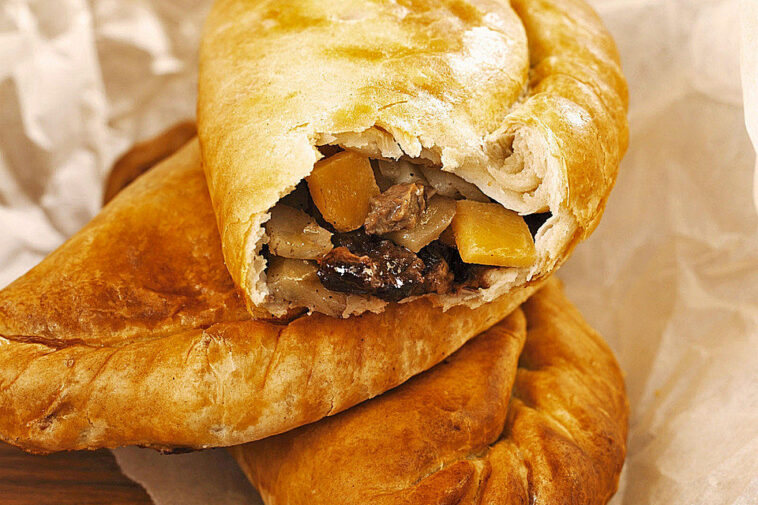
Ingredients for 2 servings:
- 1 package of puff pastry, frozen, 6 slices
- 2 handfuls of turnip(s)
- 2 handfuls of potatoes
- 250 g beef, shoulder, hip or high rib, the main thing is that it is marbled with some fat
- 2 handfuls of onions
- salt and pepper
- Milk
Instructions
Working time approx. 1 hour; Rest time approx. 2 hours; Total time approx. 3 hours
Filled puff pastry parcels
Defrost the puff pastry sheets according to the package instructions. In the meantime, grate or thinly slice the swede, potatoes, and onions. Cut the beef into small pieces. They should all be roughly the same size so they cook at the same time. Once the puff pastry sheets have thawed, place 3 sheets per serving on top of each other on a floured work surface and roll them out. About 1 cm thick, depending on how thin or thick you like your puff pastry. Place the swede, potatoes, beef, and onions in the center of the rolled-out pastry. Season each layer with a little salt and pepper. Brush the edge of the puff pastry with milk and then fold it in half, pressing firmly. Be careful not to leave any ingredients in the edge, as this will create holes in the pastry. Now comes the (original Cornish) “crimping.” This is done starting at the bottom right edge. The corner is folded inward, then the next fold is folded over the first, and so on. (It’s hard to explain, so I’ve included photos). Once the entire edge has been done this way, it will look a bit like a braid. The pasty is then stood upright with the braided edge facing upwards. It is best to chill the pasties for at least 1 to 2 hours. Preheat the oven to 220 degrees Celsius and brush the pasties with milk, cutting one or two air holes in the highest part of each so that the steam can escape and the pastry does not tear. Bake for around 10 minutes at 220 degrees Celsius, then reduce the temperature to around 180 degrees Celsius and bake for around 50 to 60 minutes until they are golden brown and crispy. In Cornwall, pasties are often eaten on the go from a paper bag, and at home they are often served with brown sauce or ketchup, depending on taste.


Facebook Comments