 John Myers
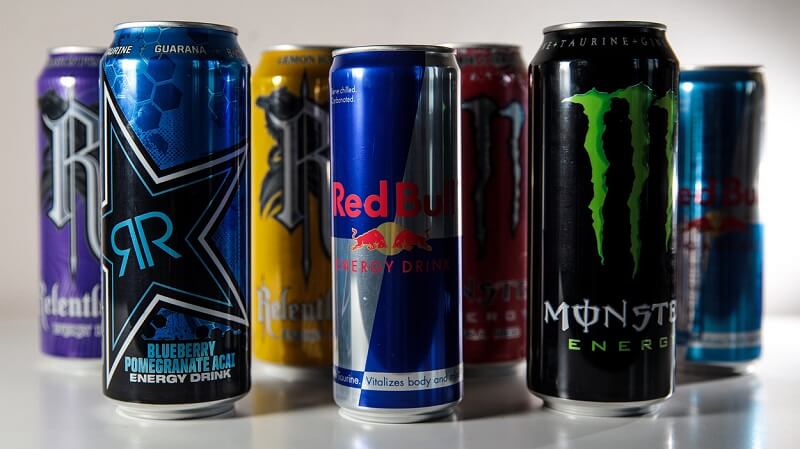
In a preliminary assessment, the European Food Safety Authority (EFSA) has determined maximum values for caffeine for the first time.
The essentials in brief:
- In a scientific report, the European Food Safety Authority (EFSA) has determined the values for caffeine that are harmless to health.
- For healthy adults, single doses of up to 200 milligrams of caffeine (equivalent to 2-3 cups of coffee or 2.5 cans of energy drink) drunk within a short period of time do not pose a health risk.
- Spread over the day, 400 milligrams of caffeine is considered safe for healthy adults, with the exception of pregnant women.
- For children and adolescents, 3 milligrams of caffeine per kilogram of body weight per day is considered harmless.
- In pregnant and breastfeeding women, up to 200 milligrams of caffeine spread throughout the day is safe for the fetus and the breastfed child.
Almost 70 percent of all young people drink energy drinks, and one in four of them drink more than is healthy. But students and adults also use caffeinated soft drinks to improve their performance and concentration; at parties and when driving, they should drive away tiredness.
What’s in energy drinks
Most energy drinks taste artificially sweet and are usually made up of the following ingredients:
Water, sugar (e.g. dextrose, glucose, sucrose, fructose), carbonic acid, caffeine, taurine, glucuronolactone, colors and flavors. The caffeine provides the stimulating effect, but this only applies to caffeine in moderation. Depending on the manufacturer, the drinks differ in terms of plant extracts such as mate or guarana, various flavorings and colorings.
High sugar content
Due to the high sugar content, energy drinks contain a relatively large number of calories, about as many as cola drinks or lemonades. Two cans of this drink (500 milliliters) can contain up to 70 grams of sugar, the equivalent of 24 sugar cubes. Alternatively, there are sugar-free versions that are sweetened with artificial sweeteners.
Mandatory maximum levels for additives in energy drinks
The legal provisions for energy drinks in Germany are in the fruit juice and soft drink ordinance. According to this, energy drinks are caffeinated soft drinks that may contain a maximum of 320 milligrams of caffeine per liter. Maximum levels also apply to other ingredients.
| Ingredient | Maximum content (milligrams per liter) |
| caffeine | 320 |
| taurine | 4,000 |
| inositol | 200 |
| glucuronolactone | 2,400 |
Labeling obligation for increased caffeine content
Since the end of 2014, if the caffeine content is more than 150 milligrams per liter, drinks must bear the notice: “High caffeine content. Not recommended for children and pregnant or breastfeeding women”. The caffeine content in milligrams per 100 milliliters must be given in brackets.
These requirements also apply if the beverage is sold loose. Here the information must be given on a sign on or next to the goods or on the food and drink menu in restaurants.
The caffeine content rules do not apply to caffeinated coffee- or tea-based soft drinks where “coffee” or “tea” appears in the designation. This is the case, for example, with iced tea.
Dangers of energy drinks
A 250 milliliter can contains 80 milligrams of caffeine, as much as a cup of coffee. That sounds harmless at first, but it often doesn’t stop with a can. If several energy drinks are drunk in a row, undesirable effects can occur.
These include, among others:
- nervousness
- insomnia
- nausea
- headache
- sweats
- high blood pressure
- tachycardia
- perceptual disorders
- cardiac arrhythmias
- circulatory collapse
There is a health risk for children and adolescents if they consume more than 3 milligrams of caffeine per kilogram of body weight per day. For a healthy young person with a body weight of around 50 kilograms, this is 150 mg of caffeine. This amount is already exceeded with two Energy cans, each with 80 mg caffeine per 250 ml. In adults, caffeine single doses of up to 200 milligrams (daily doses up to 400 milligrams) are harmless to health. This corresponds to 2 to 4 cups of coffee.
It has not yet been clarified whether the undesirable effects of caffeine are increased by combining it with other ingredients such as taurine, guarana or L-arginine.
Dangerous combination with alcohol
Adolescents and young adults drink energy drinks in large quantities of more than one liter on certain occasions. Risks for the cardiovascular system may arise for this group.
The consumption of energy drinks in connection with alcohol and/or physical exercise has not been conclusively clarified.
The caffeine “masks” the effects of the alcohol. Studies have observed that the feeling of intoxication is significantly reduced, tiredness and exhaustion are not properly perceived. This leads to a higher willingness to take risks. For example, students in the United States who drank energy drinks mixed with alcohol were twice as likely to cause car accidents.
There have been several deaths that may be linked to the consumption of energy drinks in combination with alcohol and vigorous exercise such as dance. However, a direct causal connection between the consumption of the drink and the deaths has not yet been proven.
In a statement on the assessment of energy drinks, the Federal Institute for Risk Assessment reports cases of cardiac arrhythmia and kidney failure, including deaths.
Demand for a ban on sales
Based on the EFSA assessment and a randomized, double-blind, controlled cross-over study by the David Grand Medical Center, the consumer centers are demanding a ban on the sale to minors of all soft drinks with an increased caffeine content (over 150 milligrams per liter. This includes many energy drinks and some cola drinks.
In addition, the consumer centers consider better labeling of the products to be urgently needed: the note “increased caffeine content” is completely inadequate. The warning must be supplemented with the side effects in combination with alcohol and physical exertion. Even the warning “Not suitable for children and pregnant or breastfeeding women”, which is now mandatory, is not enough. These instructions should be clearly visible on the front of the products!
Comparison of caffeine levels
- 1 cup (150 milliliters) of coffee: 50-100 milligrams depending on strength
- 1 espresso: 50-60 milligrams
- 1 glass (200 milliliters) of cola drink: 30 milligrams
- 1 can (250 milliliters) of energy drink: 80 milligrams of caffeine
- 1 milk chocolate (100 grams): 3-35 milligrams
As a rule, coffee is not consumed in such large quantities as energy drinks.


Facebook Comments