 John Myers
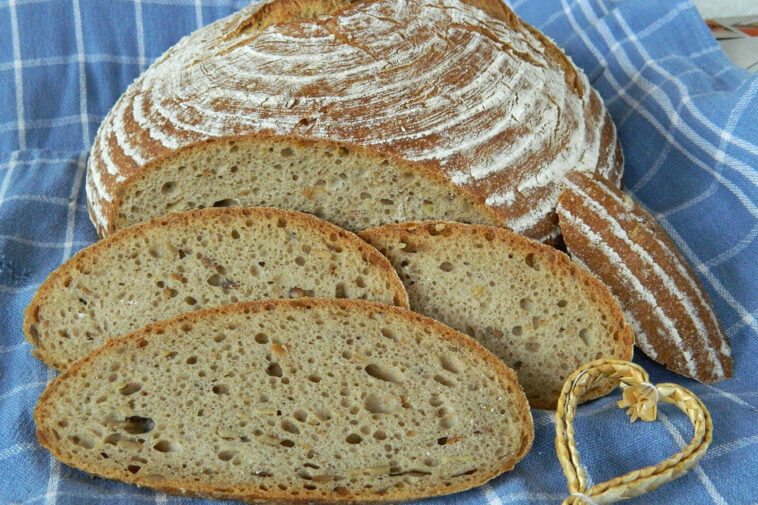
Ingredients for 1 servings:
- 200 g wholemeal rye flour
- 200 g water, lukewarm
- 40 g rye sourdough
- 100 g wholemeal spelt flour
- 180 g water, boiling
- 120 g seeds (sunflower seeds, flax seeds)
- 120 g water
- Pre-dough
- Brew piece
- Source piece
- 600 g wheat flour type 1050
- 200 g water, cold
- 2 tsp salt
- Fat for greasing the bowl
- Flour for the work surface and the proving basket
Instructions
Working time approx. 30 minutes; Rest time approx. 18 hours; Cooking/baking time approx. 40 minutes; Total time approx. 19 hours 10 minutes
Preparations the night before: Ideally, you should have three bowls (stainless steel) ready, one of which should be the bowl for your mixer (if you don’t have a mixer, the recipe will still work, although the kneading times will vary considerably). First, pour the lukewarm water into the mixer bowl and slurry the sourdough (approximately 40 g) with it. Then add the wholemeal rye flour and mix everything until no dry flour is visible. The pre-dough is now ready. For the soaked dough, boil water and pour approximately 180 g of boiling water over the wholemeal spelt flour (second bowl). In the third bowl, mix the ingredients for the soaked dough as specified in the recipe. Cover all three bowls with a towel (or foil) and let them stand at room temperature overnight. The following day (after at least 8 hours), you can start with the bread dough. If you don’t have time early in the morning, you can also keep the starter dough in the fridge and continue working on it in the afternoon. To do this, add the soaked dough and the soaked dough along with the remaining ingredients to the starter dough. If you like, you can also add the salt later; this improves water absorption. Mix everything together on a low speed with the mixer (about 2 minutes). Then increase the power to a higher setting to knead the dough thoroughly. I set my Kenwood to a maximum of speed 2 (about 10-14 minutes). Ideally, the dough should look nice and smooth, not tear, and pass the window test. If the window test only just works, that’s usually not a problem, as the dough is now placed in a greased bowl (I use 1-2 tablespoons of olive oil) to rest. The dough should rest for about 30 minutes (preferably longer) before stretching and folding it for the first time. To do this, reach under the dough with wet hands, stretch it out, and fold it over itself. Do this on all four sides and let the dough rest for another 30-60 minutes. Lightly flour the work surface and the proving basket. Remove the dough from the bowl with wet hands and “dry” it several times in the flour (one side at a time) to create a smooth surface. Then shape it and place the piece of dough, seam-down, in the proving basket. Cover and let the dough rest for at least 60 minutes. You can also store the dough in the refrigerator. Even 6 hours was no problem for me. While the dough rests, preheat the oven to 250°C (top and bottom heat). Since I use a pizza stone, I actually preheat the oven for a full hour. At the very bottom of the oven, I let a baking sheet heat up. Finally, carefully tip the dough onto the stone, score it as desired, pour a glass of water onto the bottom baking sheet, and, if available, turn on the oven’s steam function. Bake the bread for approximately 13-15 minutes. After 15 minutes, open the oven, reduce the temperature to 200°C, and deactivate the steam function if necessary. After another 22-25 minutes, the bread is ready. Additional information: If you can’t make all the dough the next morning, you can store the ingredients in the refrigerator and continue working on it from midday. You can also let the finished dough rest for a few hours longer using the refrigerator. The bread also tastes very good with hazelnuts that have been roasted and shelled beforehand. There are many tips on YouTube for shaping the bread, but it still requires a lot of experience and practice. Scoring the dough shortly before baking is not absolutely necessary. If you don’t do this, the bread will tear more wildly, which may be desirable. (But be careful: If the dough’s rising power is still very high because the resting time was too short, or if you made folding mistakes, the dough can tear very unsightly.)


Facebook Comments