 John Myers
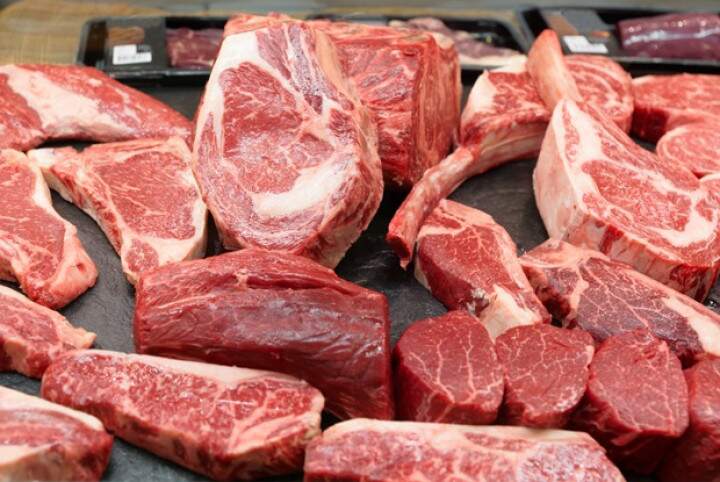
You buy organic meat, you feel good, and yet you change … little. Because most meat is still produced conventionally.
That’s what it’s about:
There are many good reasons to buy organic meat
The animals had more space when they were alive, they received better, often regional food, less medication and were mostly allowed to remain physically unharmed. Organic meat seems to make it possible to consume meat with a clear conscience.
60.7 percent of Germans see it that way, because they always or occasionally eat organic meat. This is the result of a Statista survey. Even if this is not representative, it stimulates thought. Because if more than every second person buys organic meat regularly, a lot must have happened in meat production as a whole, right?
That’s why we need to talk about it:
More and more organic meat is being produced
In a direct comparison from 2008 to 2017. This is shown by the data from the Agricultural Market Information Society (AMI) and the Federal Agency for Agriculture and Food (BLE): In 2008, 70,100 tons of organic meat were produced, in 2017 it was a whole 105,800 tons – 50 percent more organic meat than ten years ago.
But:
There is no less conventional meat because of this
Conversely, one would think that conventional meat production had declined. But this assumption only withstands a quick glance at the so-called meat balance sheet, which is drawn up annually by the Federal Statistical Office, the Thünen Institute and the Federal Agency for Agriculture and Food.
In 2018, 8,085,380 tons of meat were produced, compared to 8,212,240 tons the year before. That is actually 1.54 percent less. However, compared to 2008, you can see that this decrease is only a recent development, because in 2008 it was only 7,636,590 tons. In a long-term comparison from 2008 to 2017, this means an increase of 5.78 percent.
The proportion of organic meat is very low
One might think that this increase can be explained by the new biowave. But that’s not the case. In 2017, organic meat accounted for only 1.28 percent of all meat production, and in 2008 it was only 0.92 percent.
And: The people who consciously choose organic meat have less influence on the market than the people who buy conventional meat. This becomes clear when you compare the proportion of sales revenue that comes from organic farming compared to conventional meat. Meat accounts for only 16.3 percent of sales revenue from organic farming. In contrast, the total for agriculture is 33.9 percent.
These figures are in line with experts’ assessments that increasing awareness of animal welfare and sustainability goes hand in hand with reduced meat consumption. People for whom it is important that animals are kept organically eat less meat than people for whom organic is not important.
Does everyone else eat more meat than they used to? no In fact, 59.20 kilograms of meat were consumed per capita in Germany in 2018, 59.05 kilograms of meat in 2017 and 60.09 kilograms in 2008. This means that, overall, a little less meat was consumed in 2017 than in the previous year, but more than a decade ago. Why is more meat produced if our meat consumption is stable over the long term?
We consume more than we eat
In fact, a significant portion of meat is not consumed directly by us, but it is consumed by us. This means pet food, industrial use and losses in animal husbandry and slaughter. This means that in 2017 each of us consumed a total of 27.27 kilograms of meat in addition to our own consumption. Was it less in 2008? no Because in 2008 there was an additional 27.18 kilograms of meat per capita. So these differences in the gram range cannot be the solution.
Much meat is exported
In 2017, a total of 44.83 percent of the meat produced in Germany didn’t even end up in the shop where we could have bought it – and where we could have decided for or against organic. Because Germany exports meat and meat products abroad in bulk. And there are more and more.
In 2008 it was still 3,000,020 tons, in 2017 it was 3,681,650 tons, i.e. 22.72 percent more. And according to Agricultural Market Information Society, this is not organic meat. Germany does not export any significant amount of organic meat, but even imports it if necessary.
Hardly organic in restaurants
Another explanation why we have little influence on meat production is so-called out-of- home consumption . This means canteens, canteen kitchens and system catering such as fast food chains. There are no current figures that show what percentage of the meat produced ends up with them. Just a report from 2015 with data from 2004, published by the Scientific Advisory Board for Agricultural Policy in the Federal Ministry of Food and Agriculture. This showed that in 2004 8 percent of the meat produced in Germany ended up on the out- of-home market . However, experts at the University of Göttingen assume that this proportion is even larger today.
Is the out-of-home market nio ? Not according to the Agricultural Market Information Society. The price surcharges for organic meat are simply too high for canteen kitchens and canteens. If there were organic, then rather than meatless side dishes.
And now?
Well, good question…
Organic meat is becoming more and more popular and therefore more and more of it is being produced, but by no means less conventional meat. On the contrary – it is even more. Buying organic meat can give us a clear conscience, but we hardly have any influence on the entire production method. We can only decide whether the meat we buy and eat ourselves is organic or not.


Facebook Comments