 John Myers
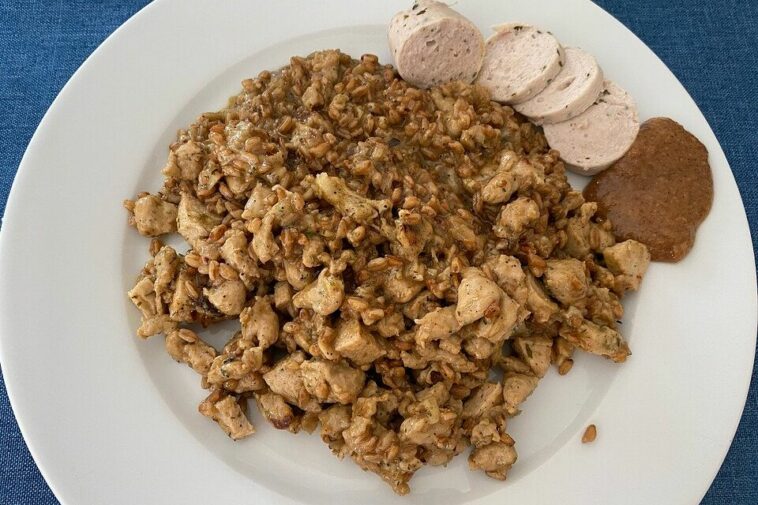
Ingredients for 2 servings:
- 1 onion(s)
- 1 clove(s) garlic
- 1 ½ cup(s) spelt rice or regular spelt soaked overnight
- n. B. wheat beer, dark
- 200 g sausage meat (white sausage meat)
- Chicken broth
- e.g. butter flakes
- 50 g Emmental cheese
- 1 tbsp honey
- Mustard seeds
- Clove powder
- salt and pepper
Instructions
Working time approx. 30 minutes; Rest time approx. 10 minutes; Cooking/baking time approx. 20 minutes; Total time approx. 1 hour
Dice the garlic and onion and sauté. Then add spelt rice or regular spelt that has been soaked overnight (not milled like rice) and toast everything slightly. Finally, deglaze with dark wheat beer and stir continuously until the liquid has evaporated. Tip: The more often you stir the ingredients of the grain risotto with little or no liquid over the hot pan without them burning, the more roasted substances are created and the more flavorful the grain risotto will be. That’s why it’s said that the more you stir, the better it becomes. After the first boil-down, remove from the heat, let it cool slightly, and add the sausage meat. Be careful, it will thicken quickly, but it should be in the smallest possible pieces. Pierce if necessary. Then add more stock a ladleful at a time and reduce, stirring constantly, until the spelt rice or spelt has the consistency you like. Tip: Italian gourmets also eat risotto al dente, meaning with something between their teeth. North of Italy, people prefer to eat risotto cotto, or well-cooked. When the grain has the consistency you like, remove from the heat. Stir in grated cheese, butter flakes, honey, a little mustard seed, and clove powder, and season with salt and pepper. Cover and let stand for 10 minutes; this will make the grain risotto creamier. Finally, plate up the food, garnish with fresh seasonal herbs, if desired, and serve. Garnish with 2 or 3 slices of white sausage and a dab of white sausage mustard. Serve with the rest of the dark wheat beer. This is a dish that might have been eaten 2,000 years ago in the Pfaffenwinkel region of Upper Bavaria, south of the Via Claudia Augusta, the first road across the Alps to connect Europe.



Facebook Comments