 John Myers
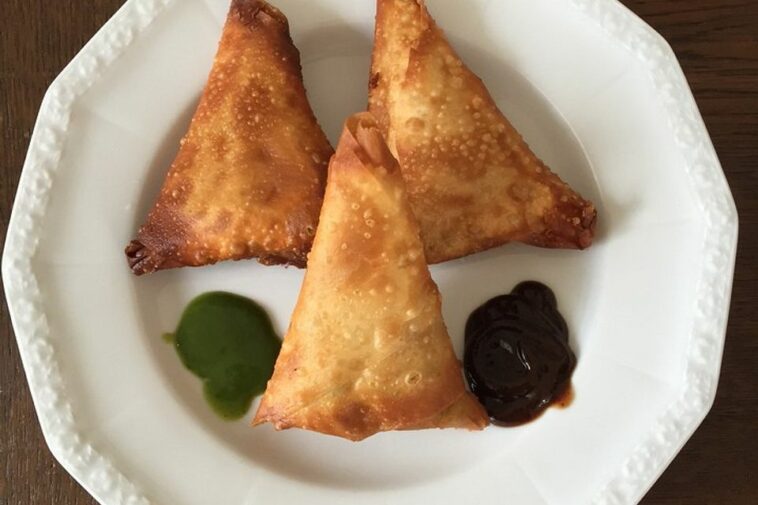
Ingredients for 4 servings:
- 300 g flour
- some salt
- little water
- 3 large tomatoes
- 3 m.-sized potatoes
- 1 can peas
- 2 bell peppers
- 1 large onion(s)
- 1 handful of curry leaves, dried
- some spice mix (Kitchen King)
- e.g. turmeric
- e.g. Paprika powder, sweet and hot
- e.g. Garam Masala
- n. B. cumin powder
- e.g. salt and pepper
- possibly coconut milk
- e.g. oil for frying
Instructions
Working time approx. 2 hours 30 minutes; Cooking/baking time approx. 5 minutes; Total time approx. 2 hours 35 minutes
Indian vegetable dumplings
First of all: Samosas are small, deep-fried pastry parcels filled with vegetables. They are suitable both as a starter and as a main course. The quantities given here refer to samosas as a main course. Peel and dice the tomatoes, potatoes, peppers, and onions. Reserve the liquid from the tomatoes. Boil the diced potatoes until soft. For the dough, make a dough from flour, salt, and a very small amount of water. The dough should be very firm. It is best to mix the dough with a mixer fitted with a dough hook until small, unconnected flakes form, and then knead them by hand. The dough should not stick to your hands and should be unusually tough. Form the dough into balls about the size of ping-pong balls. You should make about ten of these balls. Roll the balls out very thinly into flat flatbreads. Do not flour the surface; the dough must be firm enough not to stick. If not, add more flour to the dough and knead again. The flatbreads should have a diameter of about 15 cm (kneading and rolling them out will probably be unusually strenuous). For the filling, sauté the onion in a large pan (all the vegetables must fit in here). Add the diced tomatoes with all their liquid, as well as the remaining vegetables. Rub the dried curry leaves between your hands and add them. Season to taste. Note: This dish thrives on turmeric and caraway seeds. The filling is usually spicy. Sensitive gourmets should, of course, only use as much chili powder as they can tolerate. The filling should be slightly saucey. You can add water or coconut milk. The filling can be very spicy and should still be simmering gently while filling the dough. To do this, cut each circle of dough in half and shape them into small school cones. To do this, mentally divide the semicircle into three cake pieces and stick the two outer cake pieces together. Press the tips together to prevent any sauce from dripping through. Now fill the folded cones (about one and a half to two tablespoons per pocket; you can press the filling in, and the dough will then form a dome) and seal the top edges (it’s okay if some sauce sticks to the outside). The pockets will dry out quickly, but that’s okay. Heat oil in a small pot (it should form a bath at least 3 cm deep and not get too hot—you’ll know it’s at the right temperature when the samosas are evenly browned). Slide the samosas into the hot oil with a slotted spoon and fry on both sides. When the dough is crispy brown, drain on a kitchen towel. Keep the finished samosas warm until they’re ready to serve. They taste best freshly fried. If they cool down, the filling will soften the dough a bit, but they’ll still be delicious. Tips: You can get all the spices you need at an Asian store. The preparation time corresponds to the time I need for all the steps combined. It’s worth taking your time to prepare the vegetables and the dough, for example; if you skip that, you can finish the rest in about half an hour to three-quarters of an hour.



Facebook Comments