 John Myers
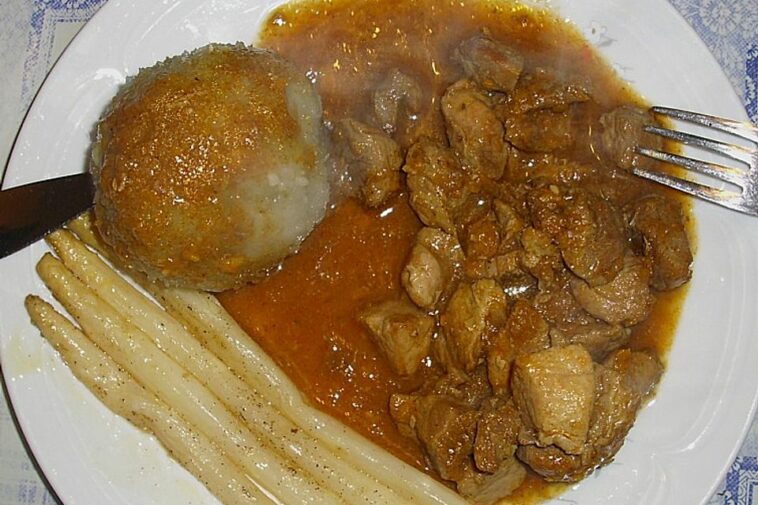
Ingredients for 10 servings:
- 5 kg potatoes
- 2 stale rolls
- 1 pinch of salt
- butter
- possibly cornstarch
Instructions
Working time approx. 1 hour; Total time approx. 1 hour
You need a piece of sulfur string; some people use dumpling white instead. Peel the potatoes and sulfurize them (absolutely – it gives them a great flavor). Burn a piece of sulfur string or paper in a pot with the peeled potatoes and put a lid on it. (You can get this string wherever they sell fermentation material for fruit wine, e.g., at a drugstore.) Let it stand until the sulfur has burned off, or light it again. Wash the potatoes after sulfurizing. This prevents the dumplings from turning such a bright green. Then divide the potatoes into two parts, 2/3 for grating, 1/3 for cooking. Grate the 2/3 of the potatoes by hand using a potato grater. Grating with a machine doesn’t produce as long-fibered a result as grating by hand. Press the grated potatoes in a cloth or press bag until as dry as possible. I press it overnight, when the pulp is almost dry. Collect the water and let the starch settle. Then add potato starch if necessary. Boil the remaining third of the potatoes until mashed, using a hand blender if necessary. It should result in a very thin mash. Place the squeezed, dry, and fluffed potatoes in a plastic bowl. (Place the bowl on a damp cloth so it won’t slip while mashing.) Add a generous pinch of salt and the reserved starch. Pour the boiling mashed potatoes over the potatoes and immediately mash everything thoroughly and vigorously with a masher. Have someone hold the bowl. You can also mash them in a food processor with the dough hook. If the dumpling mixture pulls away from the bowl, it’s done. Season to taste and add more salt. If the dumpling mixture is difficult to shape with your hands, adjust it lightly with cornstarch and mash again. Cut the day-old or older rolls into small, even cubes and toast them in a pan with butter, stirring gently constantly to ensure they brown evenly. The cubes are done when they rustle in the pan when stirred. With wet hands, form dumplings and place 1 teaspoon of breadcrumbs in the center. Place in hot, but not boiling, water and let stand until the dumplings float. Allow at least 20 minutes. When the dumplings are ready, remove them from the water, drain well, and place them on a plate. Do not use a bowl, and do not stack the dumplings on top of each other. The dumplings are so fine that they would melt into a mush in a bowl. Cooking tips for Thuringian dumplings: Use the largest potatoes possible. There are special dumpling potatoes (e.g., floury ones). In my experience, the earliest new potatoes, the very first harvest potatoes, and super-fresh potatoes are not as good. There are slightly modified recipes with milk, eggs, or semolina, etc. However, these are not the traditional Thuringian dumplings. If you go to all this trouble, you will notice from the result that ready-made (including Thuringian) dumpling mixture does not deserve the name Thuringian dumpling. They’re usable in a pinch, but nowhere near as delicious. Dumplings go well with any meat, sauerbraten, and poultry. Leftover dumplings can be fried in slices or steamed again. They taste far too good to waste a single dumpling. It’s not difficult, but it’s incredibly time-consuming. But the result is amazing.


Facebook Comments