 John Myers
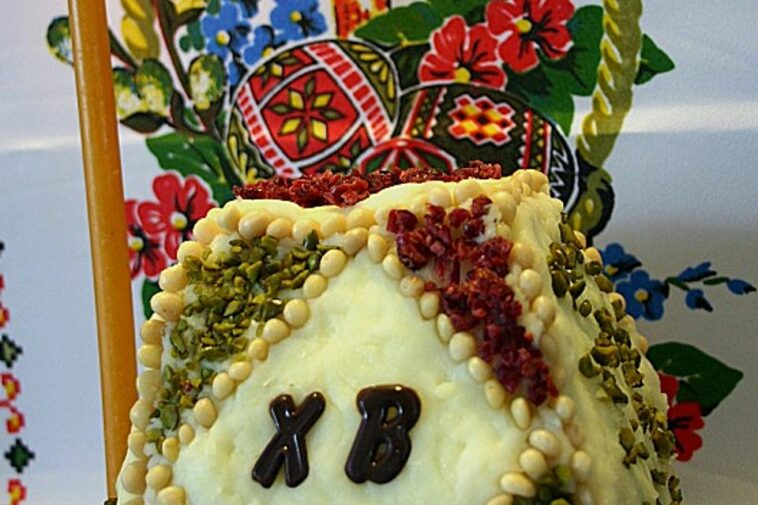
Ingredients for 1 servings:
- 1 kg cream cheese, preferably dry, not skimmed
- 500 g sugar
- 400 g butter, soft
- 6 eggs
- 2 packets of vanilla sugar
- 150 g raisins, alternatively sultanas
- 200 ml whipped cream
- 1 tbsp sugar
- 1 tbsp cornstarch
Instructions
Working time approx. 45 minutes; Rest time approx. 1 day 1 hour; Total time approx. 1 day 1 hour 45 minutes
according to an ancient recipe of the Orthodox Church
Mix the cream cheese, sugar, softened butter, and eggs well. Bring to a simmer on the stove, stirring constantly, first over low heat and then slightly higher. Remove from the heat, add the raisins and vanilla sugar, and let cool completely. Place a piece of white cotton or gauze, approximately 50 x 50 cm, in a bowl so that the edges extend well over the bowl’s rim. Pour in the cream cheese mixture. Cross the corners of the cloth over the cream cheese mixture and tie a knot. Hang the resulting bag over the bowl overnight so that the excess liquid can drain away. Then place the bag and contents in a sieve. Place the sieve over a pot. Cover the bag with an upturned plate and place a weight on top (approx. 2-3 kg). Let it drain under the weight for about another 24 hours, otherwise the paskha will become too mushy. Then remove from the bag and shape it. Traditionally, the paskha should be shaped like a pyramid with the tip cut off. For the cream sauce, combine the heavy cream, sugar, and cornstarch. Stir on the stove over low heat until the mixture thickens. Pour the Paskha over the pan while it’s still warm. Decorate as desired. The traditional Orthodox Paskha bears two Cyrillic letters: X and B (pronounced H and W). These are the first letters of the Russian phrase “Christ is risen.” The Paskha tastes best on a thick slice of the traditional Russian Easter pastry, kulich. Easter wreaths and other yeast pastries go well with it.


Facebook Comments