 John Myers
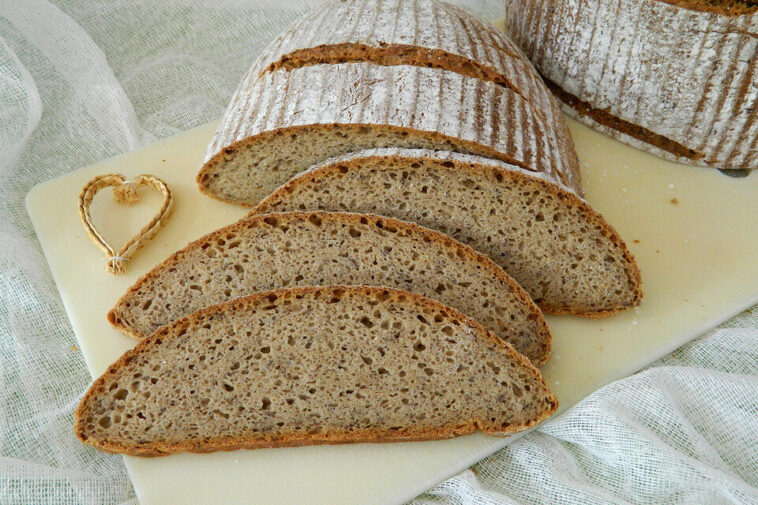
Ingredients for 1 servings:
- 150 g rye starter *
- 250 g wholemeal rye flour
- 500 ml water
- 50 g grain (6-grain grain), crushed
- 50 g flaxseed meal
- 300 ml water, hot
- 750 g sourdough
- 200 g wholemeal rye flour
- 450 g wholemeal spelt flour
- 50 g oat flakes
- 20 g salt
- 2 shots of olive oil
Instructions
Working time approx. 30 minutes; Rest time approx. 18 hours; Cooking/baking time approx. 1 hour; Total time approx. 19 hours 30 minutes
Delicious vegan bread with a crispy crust, for interested hobby bakers.
Very detailed recipe, but it’s not as much as it seems because I’ve packed a lot of tips into the recipe. For the required amount of sourdough, you should use a relatively large bowl with a lid, as the dough will easily double in size before it collapses again. Once you have found the right bowl, mix the starter with the rye flour and water until you have a smooth dough that should be very runny and ideally already showing slight bubbling. The dough should then rest for at least 8 hours, covered with the lid (not sealed!), ideally overnight. If you don’t have enough time, the sourdough is ready and ready to use when it has collapsed again, but this should not be before 8 hours. The longer the sourdough is allowed to rest, the stronger its leavening power and flavor will be. The dough should smell accordingly when it is ready; a strong sour smell may be off-putting, but this is normal. Before you begin with the bread dough, take another 150g of the sourdough starter and place it in a sealed jam jar in the fridge as a new starter. It will keep there for about a week and then doesn’t need to be thrown away; just feed it. It’s best to start by pouring hot water over the grains and seeds in a bowl, stirring, and letting them swell while you mix in the remaining ingredients. Knead the sourdough, flours, oats, salt, olive oil, and swollen seeds and grains (they should be cool enough to handle) into a soft dough, ideally with your hands. Knead for at least 5-10 minutes. The dough should be relatively moist, otherwise it won’t rise, but it shouldn’t be sticky at all, and only the grains/seeds should stick to your hand. If the dough seems too stiff/dry, add more water if desired. The finished dough should now be covered with a damp cloth and allowed to rest for at least 1 hour in the bowl in which it was made. It can then either be filled into a desired dish, e.g. a proving basket, or kneaded into a dish and laid out on baking paper. Be careful, though, as the dough, being so soft, will expand considerably and not rise much. The dough should now be allowed to rise, covered, for another 2 hours. Bake the bread at 250°C fan-assisted for 20 minutes. For the desired crispy crust, either brush the loaf with water every 5 minutes during these 20 minutes, or place a drip tray filled with water on the bottom of the oven. After 20 minutes, reduce the oven temperature to 190°C, let the steam escape from the oven, and remove the drip tray. Bake the bread for a further 40 minutes. After 40 minutes, you can tap the bread to check if it’s done. If it’s not, or if you want an even darker crust, you can extend the baking time by 10-20 minutes and turn the bread over. *You can find many recipes for the starter on Chefkoch; it’s best to just search. You can also find ready-made starter in bags at many supermarkets.



Facebook Comments