 John Myers
If you want to boil water in an energy-saving way, you often use the kettle. In fact, the device heats the water quickly and energy-efficiently – but it is not always the better alternative to the stove. The decisive factor is the amount of water that you want to boil. The following applies here: If you do not want to heat more than 1 to 1.5 liters of water, the kettle is almost always the best choice.
If, on the other hand, you want to boil water in a closed pot on an electric stove, this takes much longer: the electric current must first heat the stove plates and then the pot before the water is heated. In addition, the hob then radiates residual heat for around 20 minutes, which remains unused. Ceramic hobs are more efficient here than cast-iron stovetops. Basically, when heating liquids on the stove, pots should be covered with a pot lid.
If you want to boil a small amount of water, you should use a kettle instead. The water boils after around three minutes and hardly any heat is lost unused. Plastic devices are more efficient than metal ones because the material absorbs less heat. However, the energy and cost advantage only applies to water volumes of up to around 1.5 liters. The current devices do not hold much more anyway.
- For water volumes of up to 1.5 liters, the kettle is more efficient than a stove.
- When cooking on the stove, always close the pot with a suitable lid.
If you want to heat larger amounts of water, for example, to cook large portions of pasta or potatoes, you should not use the kettle. In this case, it is usually not worth heating part of the cooking water in the kettle either: in this case, both devices lose energy, which nullifies the savings. In addition, the cooking process for potatoes, for example, takes a relatively long time, so that the energy loss due to residual heat is less significant. This rule applies in particular to induction hotplates, which do not give off residual heat.
- Larger amounts of water can be heated more efficiently on the stove.
- The longer the cooking process lasts, the more energy efficient a stove is.
- Partial heating in the kettle is of no benefit.
- Induction hotplates are particularly energy-efficient.
You should consider whether you want to use hot or cold water from the tap for cooking: Hot water is only energy-efficient if the hot water is not generated electrically. In addition, no more than 1 liter of water should flow out of the tap before it gets hot.
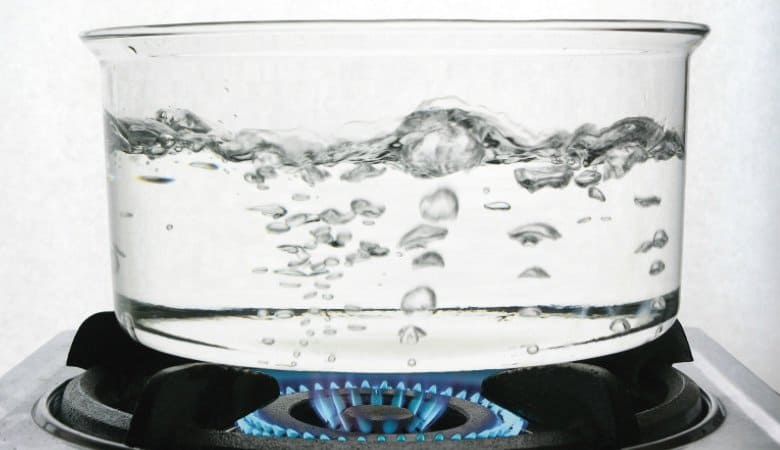
If you have a gas stove, always start the cooking process with cold water. The device is one of the most energy-saving devices: the flame is hot immediately after switching on and cold again after the cooking process. The energy costs are also lower than with all other common cooking appliances – in this category it even beats the kettle.
- Under certain circumstances, energy can be saved with warm water from the tap.
- Gas stoves are efficient and have low energy costs.


Facebook Comments