 John Myers
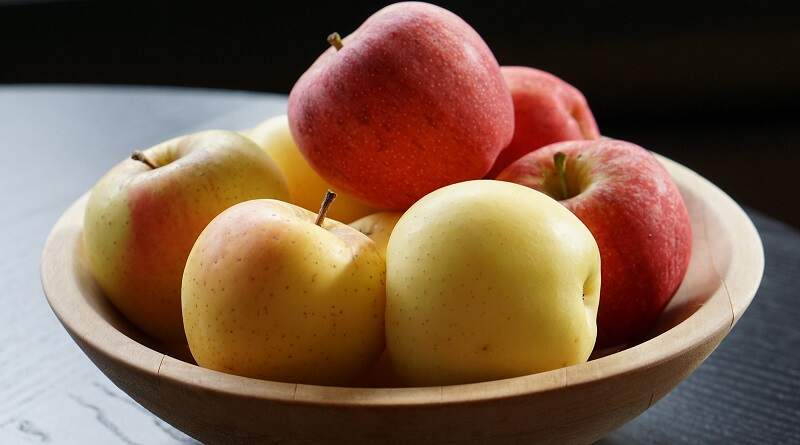
Up to 90 percent of the apple harvest is not sold after the harvest, but stored. Does that change the quality?
That’s what it’s about:
Apple is not just apple
Crisp green or snow white red: Most people already have a clear idea of what a perfect apple should look like from a purely visual perspective. There are also different preferences when it comes to taste and consistency: sweet or sour, floury or crunchy.
Whether the apple turns into a red-cheeked picture book apple is not only due to the variety – the growing conditions also play a role: Large temperature differences between day and night during the growth phase, for example, result in bright red-skinned apples. On the other hand, if it doesn’t cool down enough at night, the fruit tends to be less colored.
There are countless varieties and new ones are constantly being added. According to estimates by the Federal Research Institute for Nutrition and Food, Max Rubner Institute (MRI), there are around 20,000 varieties worldwide, 1,000 of them in Germany alone. No wonder apples rank third in global fruit production.
Vitamin content varies
There are a lot of vitamins in apples, especially carotene, thiamin and riboflavin as well as pyridoxine and tocopherol – i.e. vitamins A, B1, B2, B6 and E. And of course vitamin C, also known as ascorbic acid. So apples are healthy – of course: An apple a day keeps the doctor away.
But the vitamin C content in apples varies. The measurements differ depending on the variety, growing region and seasonal influences. Even if the apples were harvested from the same tree in the same year, the vitamin C content of the fruit can vary: “The components depend on the temperature and incidence of light,” says Dr. Bernhard Trierweiler from the MRI. “That’s why an apple from the sunny side of the tree can have a different vitamin C content than one from the shady side.”
Even the individual apple has a different vitamin C content depending on the stage of development. The content is highest in summer, after which it slowly decreases until the harvest in autumn. How the vitamin curve then continues depends not least on storage. In Germany there is no limit as far as the storage period is concerned. As long as apples look crisp, are free of mold and otherwise meet marketing standards, they can be traded. The limitation is provided by the apple itself: Varieties that can be stored well can last up to nine months, and in some cases even longer. Research is being carried out into a year-round storage facility. Almost 180,000 tons of apples are currently stored in Germany. After the record harvest of 2019, it was even over 250,000 tons.
That’s why we need to talk about it:
Apples can lose vitamins through storage
How the fruit behaves after harvest depends first of all on the variety. Early varieties do not store well, so they should be eaten until September. Depending on their properties, later varieties can be stored for a good six to nine months. “One mustn’t forget: apples are still alive after the harvest,” says biologist Bernhard Trierweiler. “Our goal is to slow down the metabolism so that the quality is maintained – not that of fruit and vegetables.” The fruit wants to be more attractive to microorganisms, so that the skin and pulp decompose quickly and the seeds come to light. In other words: The apple tree wants to propagate by putting its seeds on the path of growth. If the fruit is not cooled and stored carefully, it quickly begins to deteriorate – and the apple loses its vitamins.
Vitamin C serves as a water-soluble antioxidant in plant cells. For example, it helps protect against excessive light intensity and influences the growth and development of the plant. When the breakdown of the ingredients begins, i.e. the apple slowly forms wrinkles, the defense against stress factors becomes less and less important.
Proper storage is crucial
Effective storage is crucial to keep the apple crisp. In addition to the correct oxygen and carbon dioxide content, important factors for this are the right temperature and humidity. The natural aging process of the apples is stopped in so-called CA storage, i.e. “controlled atmosphere” storage. This is done by lowering the temperature to one to four degrees, reducing the oxygen content and increasing the carbon dioxide content.
Artificial freshness
And then it happens: the apple falls into a kind of slumber in the locked cold room. The natural aging process is stopped. As soon as the fruit has used up the oxygen through breathing, further breathing is reduced and the breakdown of the ingredients stops. At least for a few months.
Some apple varieties keep particularly well in so-called “ultra low oxygen” stores, which contain extremely little oxygen. But not every apple can tolerate that. With the “dynamically controlled atmosphere”, the oxygen can therefore be flexibly adjusted depending on the preferences of the fruit. Ethylene is often also filtered out of the air, a gas that apples produce when they ripen. What this ripening gas can do can be seen in the fruit basket at home: if bananas are stored next to apples, they go bad faster.
Loss of vitamin C
From a purely visual point of view, the apples still look fresh and crunchy after nine months if they have been stored well. But now comes the bad news: depending on the variety, the fruits lose up to 50 percent of their vitamin C content. However, there are exceptions, for example, the varieties “Braeburn”, “Berlepsch”, “Cameo” and “Topaz”.
But:
There is more to the apple than vitamin C
Apples not only contain healthy vitamins, but also powerful antioxidants such as polyphenols, which are retained during storage. These secondary plant substances help the plant to protect itself from predators, for example. People can also protect themselves by eating apples: just one apple per day, i.e. around 100 to 150 grams, helps to lower blood pressure and reduces the risk of cardiovascular diseases, strokes and inflammation. Apples are even said to keep Alzheimer’s and cancer at bay.
Nevertheless, apple fans have to be very strong now, because it is also a fact: Compared to other fruits, there is rather little vitamin C in apples overall. Commercial varieties have an average concentration of around ten milligrams per 100 grams fresh weight. In comparison: Oranges or kiwis contain around five to six times more.
And now?
Eat apples – but make sure you choose the right variety!
In the end, when it comes to vitamin C, it always comes down to choosing the right apple variety. With around 19 milligrams per 100 grams fresh weight, the “Braeburn” is a vitamin bomb among apples. An apple of the “Gala” variety can only dream of this, it only has an average of a mere 5 milligrams. Even after 14 weeks of storage, there is still more vitamin C in a Braeburn apple than was ever found in the Gloster variety, for example.
But the differences are not only huge between the individual varieties. The concentration also differs in the apple itself. For example, there is five to seven times more vitamin C in the peel than in the flesh. So: The shell is best eaten with!



Facebook Comments