 John Myers
Thorough cooking can kill Salmonella. But when health officials warn people not to eat potentially contaminated food, or when a food is recalled because of Salmonella risk, that means don’t eat that food, cooked or not, rinsed or not.
Can Salmonella survive cooking?
Cooking can kill Salmonella. Depending on the type of food, the Centers for Disease Control and Prevention recommend cooking food to a temperature between 145 degrees F and 165 degrees F to kill Salmonella.
Can Salmonella be killed by heat?
Yes, heat destroys Salmonella, but the food has to be heated thoroughly.
How long do you have to bake to kill Salmonella?
These bacteria reproduce very slowly, below 40 F and above 140 F. Temperatures at which bacteria are killed vary according to the microbe. For example, Salmonella is killed by heating food to 131 F for one hour, 140 F for a half-hour, or by heating food to 167 F for 10 minutes.
Can Salmonella survive frying?
“However, cooking your eggs thoroughly will kill the Salmonella, so you can eat eggs with no concern.” “Any process in which the whites or yolks are insufficiently cooked – yielding whites or yolks that are still liquid – provides the potential for Salmonella to survive.
What is a Salmonella infection?
At what temperature is Salmonella destroyed?
Salmonella are destroyed at cooking temperatures above 150 degrees F. The major causes of salmonellosis are contamination of cooked foods and insufficient cooking. Contamination of cooked foods occurs from contact with surfaces or utensils that were not properly washed after use with raw products.
What kills Salmonella naturally?
Poultry naturally contains Salmonella, which you can kill by cooking the meat to an internal temperature of 165°F or higher. Cook all raw ground beef, pork, lamb, and veal to an internal temperature of 160 °F – and don’t rely on guesswork.
Can a microwave kill Salmonella?
Microwaves do not kill bacteria, heat kills bacteria. The higher the temperature, the faster those bacteria will die off. “Instant death” for most bacteria (including Salmonella) is about 160° F (71° C). You only need a few seconds at this temperature.
Can you cook out Salmonella in chicken?
Salmonella bacteria can be completely eradicated in meat and poultry through exposure to high temperatures, such as cooking meat and poultry to a minimum internal temperature of 165° F.
What bacteria cannot be killed by cooking?
To start with, raw meat may be contaminated with spores of certain pathogenic bacteria (e.g. Clostridium perfringens) and spores are not readily destroyed by normal cooking temperature.
How to avoid Salmonella poisoning
How does peanut butter prevent Salmonella?
So, how can you keep Salmonella out of peanut butter in the future? The key is to have a rigid system in place that does not allow contamination by water or other vectors after the roasting process. Water in a peanut butter processing plant is like putting gasoline on a fire.
Does all chicken have Salmonella?
In fact, about 1 in every 25 packages of chicken at the grocery store are contaminated with Salmonella. You can get sick from contaminated chicken if it’s not cooked thoroughly or if its juices leak in the refrigerator or get on kitchen surfaces and then get on something you eat raw, such as salad.
Can boiled eggs have Salmonella?
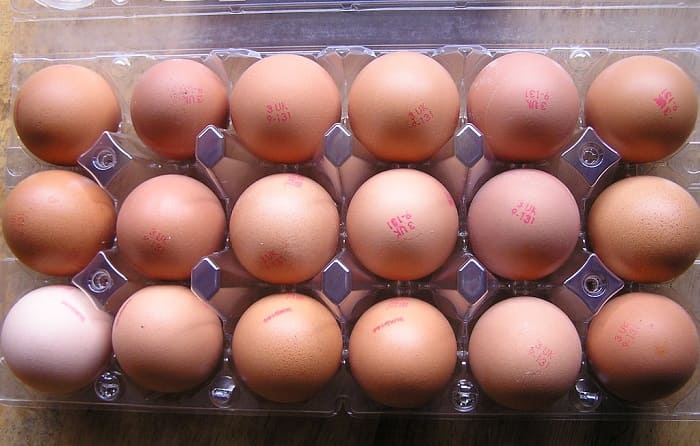
After boiling eggs, decorating them, hunting them, and adding them to candy baskets, families need to make sure leftover hard boiled eggs are handled properly so no one gets sick. Eggs can cause food poisoning because Salmonella is a common bacteria found in uncooked and unbroken eggs.
Is Salmonella in egg white or yolk?
Cooking reduces the number of bacteria present in an egg; however, an egg with a runny yolk still poses a greater risk than a completely cooked egg. Undercooked egg whites and yolks have been associated with outbreaks of Salmonella infections.
Do fried eggs have Salmonella?
While egg farmers supply a safe, clean, fresh product, it is possible for eggs to become contaminated by the food poisoning bacteria Salmonella. The good news is Salmonella is killed instantly at 74° C (165° F). So even if you are unlucky enough to get an egg with bacteria on it, the food will become safe by cooking it properly.
How long does Salmonella live on food?
Most Salmonella bacteria live on dry surfaces for up to 4 hours before they’re no longer infectious. But Salmonella’s survival rate also depends on its species. A 2003 study found that Salmonella enteritidis can survive for 4 days on a heavily contaminated surface.
What bacteria can survive boiling water?
Although, some bacterial spores not typically associated with water borne disease are capable of surviving boiling conditions (e.g. clostridium and bacillus spores), research shows that water borne pathogens are inactivated or killed at temperatures below boiling (212°F or 100°C).
Can you cook bacteria out of food?
You can kill bacteria by cooking poultry and meat to a safe internal temperature . Use a cooking thermometer to check the temperature. You can’t tell if meat is properly cooked by looking at its color or juices. Leftovers should be refrigerated at 40°F or colder within 2 hours after preparation.
Is Salmonella airborne in fridge?
It’s not an airborne kind of transmission, like COVID-19.
What are 3 interesting facts about Salmonella?
- Most reptiles and amphibians carry Salmonella.
- Salmonella diseases are zoonotic, spreading from animals to humans, and also from human to human.
- Salmonella move through their host’s intestines via flagella.


Facebook Comments