 Kelly Turner
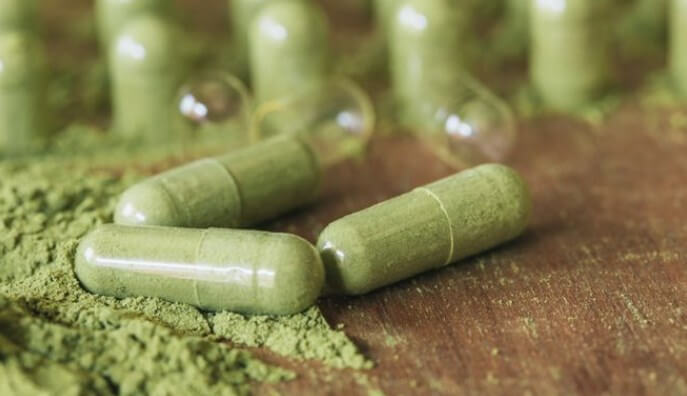
There are many different qualities of green tea extract. We explain which criteria you can check to recognize good quality and what you should look out for when taking green tea extract.
High-quality green tea extract
Green tea extract – like other dietary supplements – should only be taken in high quality so that you can benefit from it as best as possible.
The main active ingredients in green tea belong to the group of polyphenols and in the group of polyphenols to the flavonoids and here in turn to the catechins. The best-known green tea catechin is EGCG (epigallocatechin gallate), which is known for its many health properties and effects.
The quality criteria for green tea extract
When buying green tea extract, you should pay attention to the following quality criteria:
The organic quality of the raw materials: Green tea extract should be made from organic green tea in order to rule out possible contamination with harmful substances.
Regular analyzes for pesticides and heavy metals: Every harvest of the green tea material used should be tested for as many different pesticide and heavy metal residues as possible by independent (preferably German, Swiss or Austrian) laboratories. The green tea extract from Tigovit, for example, is checked for around 800 harmful substances.
Free from additives: High-quality green tea extract should be filled into capsules without superfluous additives – ideally in purely vegetable capsules. Less recommended green tea extract capsules can e.g. B. magnesium stearate (magnesium salts of fatty acids) and silicon dioxide as a release agent, phosphates, or beef or pork gelatine (as a capsule shell).
Better lower dosage per capsule: It is better to choose lower dosage capsules (max. 260 mg EGCG per capsule) so that you can take several capsules per day because the EGCG level is broken down again after 5 hours. It is therefore important that you take the extract more frequently in order to keep the level as evenly high as possible.
Taking high-dose capsules (more than 260 mg EGCG) is, therefore, neither necessary nor recommended.
Gentle production: The ingredients of the green tea leaves should be extracted gently, e.g. B. by the water infusion process, which also leaves no chemical residues and can be carried out without the use of illegal solvents or chloroform.
Pay attention to a safe EGCG dose: The daily dose should be below 800 mg EGCG because according to the European Food Safety Authority (EFSA), this is the safe maximum daily EGCG dose ( 1 ).
The capsules made from organic green tea extract from Tigovit, for example, contain 170 mg EGCG per capsule (300 mg catechins). With a daily dose of 1 capsule 3 times, you take a total of 510 mg EGCG (900 mg catechins). So you can use this product to top up the EGCG level several times a day without reaching a problematic dose. You could even take 4 capsules a day if you wanted to (but you don’t have to) and still be safe.
The green tea extract from Tigovit was also used, tested, and found to be safe in a study at the Charité women’s clinic in Berlin (2). Its high quality is also the reason why the Tigovit extract is and was used in further clinical studies.
Improved bioavailability: It is important that the selected green tea extract has a high bioavailability so that the active ingredients reach the bloodstream in relevant quantities. This is particularly important with EGCG since the substance is naturally not readily bioavailable.
However, if you add vitamin C and some piperine (an active ingredient from black pepper) to the green tea extract, the bioavailability increases, which means that more EGCG can pass from the intestine into the bloodstream and work there.
The green tea extract from Tigovit not only contains vitamin C and piperine but also consists of two different green tea extracts that enhance each other’s bioavailability. Therefore the product is also called green tea complex.
Choose decaffeinated green tea extract: Since green tea extract is also taken in the evening, it should not contain caffeine, so it should be decaffeinated. Tigovit capsules, therefore, contain only 2 mg of caffeine per capsule, which corresponds to 1.7 percent of the caffeine in a normal cup of coffee (150 ml) and 2 percent of the caffeine in a cup of green tea.
How to properly take green tea extract
If you also observe the following tips for correctly taking the green tea extract capsules, you are doing everything right:
Take on an empty stomach
Take the green tea extract capsules on an empty stomach, half an hour before a meal. The active ingredients in the green tea extract can be best absorbed in this way.
Do not take with minerals
Take the extract with water low in minerals, because minerals such as calcium, magnesium, or iron can reduce the absorption of the active ingredients in green tea. Of course, this also means that you should not take the green tea extract together with mineral supplements, i.e. not with calcium or iron tablets, nor with magnesium or zinc capsules.
Take together with omega-3 fatty acids and vitamin C
However, you can take omega-3 fatty acids and vitamin C along with green tea extract capsules because both nutrients promote the absorption of the extract’s active ingredients (3).
Vitamin C is already contained in a high-quality green tea extract (with Tigovit 40 mg per capsule; 120 mg per daily dose). However, if you take vitamin C every day anyway (which you usually do in higher doses than those containing green tea extract), then you can combine this well with the green tea extract.
Take three times a day
High-quality green tea extract capsules are ideally taken 3 times a day to achieve a consistent EGCG level: morning, noon, and evening. Taking it in the evening is not a problem, since high-quality green tea extract contains hardly any caffeine.
Ask doctor
If you are taking medication and would like to take green tea extract, ask your doctor or pharmacist beforehand whether there could be any interactions.



Facebook Comments