 John Myers
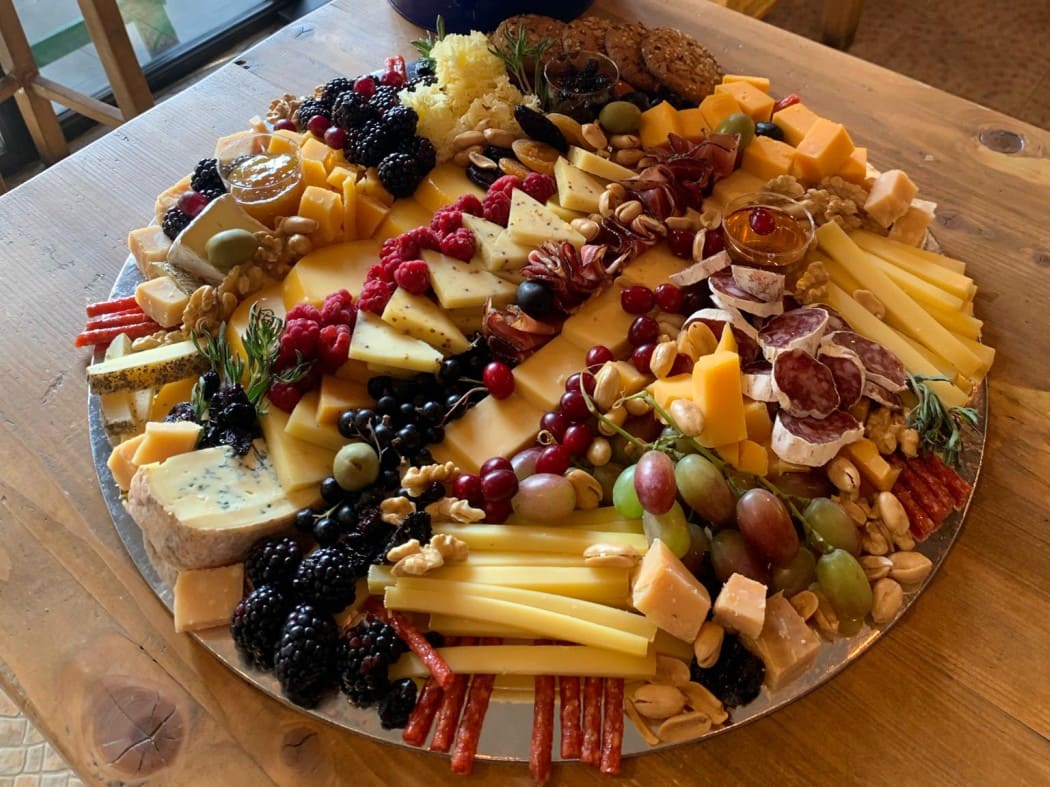
When putting together a cheese board, there are a few basic rules that you should keep in mind. A well-coordinated cheese board should contain at least four varieties. But don’t overdo it with the variety of varieties, so that you can really taste all cheeses. Five to nine types of cheese are ideal. Also, serve different aromas and flavors. So there should be hard cheese, soft cheese, and semi-hard cheese. Vary the aroma between neutral and piquant, the taste should range from spicy to hearty to mild.
Also, consider arranging the platter thematically to avoid a rather random selection: cheeses from the same region would be very harmonious, for example. The same type of milk can also represent a suitable common thread.
Another rule applies to the order of consumption: always start with the mildest cheese and work your way up to the spiciest. Therefore, assemble the platter according to the principle of the cheese clock: Arrange the cheese clockwise, starting with the mild one and finally the spiciest.
In order to avoid leftovers that you may not be able or willing to eat alone, it is advisable to always adjust the amount of cheese as precisely as possible to the number of people. If you plan on having the cheese platter as a main course, count on around 180 to 250 grams of cheese per person. If, on the other hand, it completes a menu as a dessert, around 50 to 90 grams per person are sufficient.
Depending on the amount of cheese, choose a large enough platter so that it doesn’t look too overloaded. Wood is a very good material, as is a glass or porcelain plate. You should avoid silver or stainless steel, as both can affect the taste of food.
Never serve the cheese straight from the fridge. Leave it at room temperature for about half an hour so that it can fully develop its aroma. Only cream cheese should be served chilled. Divide the cheese—or a portion of it—into bite-sized pieces before serving. Pay attention to the individual cutting techniques for the different types of cheese. Also, have the appropriate cheese knife or other suitable cutting tool ready next to the cheese platter – preferably one for each type of cheese so that the taste is not distorted.
Offer water and enough bread so that the palate can be regularly neutralized. Of course, wine is also very suitable as an accompaniment. Orientate yourself when choosing the cheese with the most intense taste. A wine from the same region or country is recommended for a regionally influenced cheese platter.



Facebook Comments