 John Myers
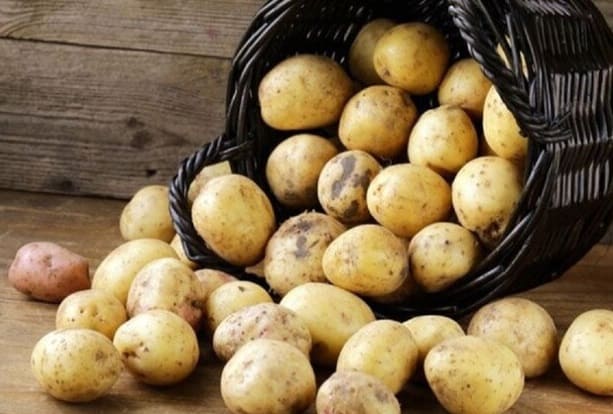
Sweet potato vs. potato – that’s what differentiates the foods
Both the potato and the sweet potato originally come from South America, but the two plants are botanically unrelated. On the contrary, while potatoes belong to the nightshade family, sweet potatoes are counted to the morning glory family.
- The two foods are already clearly different from the outside. While most potato varieties are rather inconspicuous brownish, sweet potatoes immediately catch the eye with their bright red-orange color.
- In addition to the color, the difference in size between the nightshade and the morning glory is also noticeable. Sweet potatoes, also known as batatas, are usually considerably larger than potatoes. In addition, the Erdäpfel, as the potatoes are called, especially in southern Germany, has a rather round shape. The sweet potatoes, on the other hand, are elongated. At the vegetable counter, the two foods are therefore easy to distinguish from one another at first glance.
- Potatoes have been successfully cultivated here for several hundred years and are one of the staple foods. In their countries of origin, the same applies to batata. However, it has only become very popular with us in recent years. We can also grow sweet potatoes. In contrast to potatoes, however, the sweet potato thrives much better in a warm tropical climate.
- There is also an important difference in the preparation. Both foods can be prepared in a variety of ways. However, there is one thing you should never do: eat the potato raw. Regardless of the fact that hardly anyone likes raw potatoes, there is a risk that they can be toxic. Sweet potatoes, on the other hand, are safe to eat raw. You can also eat the sweet potato leaves. In the homeland of sweet potatoes, the leaves are usually prepared like a kind of spinach.
Batata vs. potatoes – that’s how healthy the foods are
Besides the clearly visible differences between the sweet potato and the potato, there are also some interesting differences when it comes to the inner values of the two foods.
- The bright color of the batata shows that the plant is rich in carotenoids. And indeed, the sweet potato is one of the foods with the highest proportion of beta-carotene. Carotenoids are essential nutrients for our health, which are significantly involved in the formation of the A vitamin. Vitamin A, also known as the beauty vitamin, is important for healthy and beautiful skin, among other things. Vitamin E, which is also often referred to as a beauty vitamin because it has a strong antioxidant effect, as well as plenty of secondary plant substances, is also ingested with the batata. The sweet potato, therefore, acts like a small fountain of youth in our health and is a very inexpensive anti-aging agent.
- Of course, the potato also has a lot to offer when it comes to health. There is clearly more folic acid in potatoes than in sweet potatoes, which is important for many metabolic and growth processes. Folic acid is also involved in cell division and blood formation, and women should make sure that they consume enough folic acid, especially during pregnancy. Just like phosphorus, which strengthens the bones and is also found in large quantities in potatoes.
- The name sweet potato suggests that the food tastes like it, and the batata is in fact significantly sweeter than the potato. However, despite their higher sugar content, sweet potatoes are more suitable for diabetics than potatoes. This circumstance can be explained by the Caiapo, which is abundantly present in the sweet potatoes.
- Quiapo is a secondary plant substance that is found in the skin of the batata. Incidentally, with many types of fruit and vegetables, there are many important nutrients in or directly under the skin. For this reason, it is almost always worth eating the peel as well. Even with fruits that seem odd at first, such as bananas, you shouldn’t throw away the peel.
- Japanese scientists have found that Caiapo allows sugar to move from the blood into the cells more quickly. This relieves the pancreas, which has to produce fewer messenger substances. In addition, the insulin produced is used much better by the body, so the blood sugar level only rises slowly.
It has also been scientifically proven for a long time that sweet potatoes help to increase HDL cholesterol and thus have a positive effect on cholesterol levels. - Conclusion: Both potatoes and sweet potatoes are healthy. However, sweet potatoes are a bit healthier, especially for diabetics, and should therefore often replace potatoes on the menu.



Facebook Comments