 John Myers
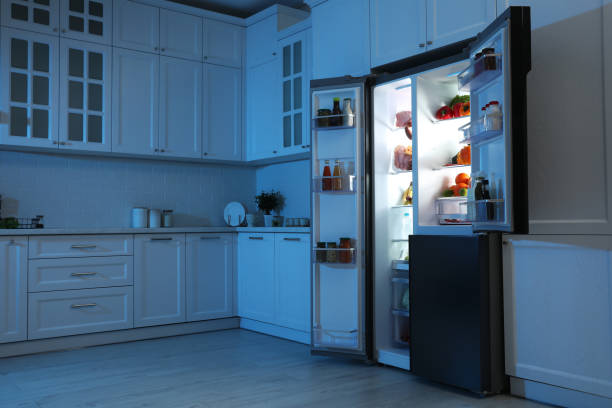
If the refrigerator is too warm, there can be several reasons behind it. It is important to fix the problem as quickly as possible, as food spoils faster if the temperature in the refrigerator is too high.
Fridge too warm: wrong thermostat setting
If it is too warm in the refrigerator, the device will no longer cool properly. Too high a temperature can be clearly seen in, among other things, sodden cardboard packaging or unpleasant odors caused by food that spoils quickly. If it is too warm in the refrigerator, harmful germs can spread faster. Therefore, refrigerator owners should immediately investigate the cause.
- Technical problems: There is often a technical defect behind a refrigerator that is too warm, for example, defects in the thermostat sensors or the thermostat itself. The defrosting device can also be defective.
- The reason often lies in the electronic control of the refrigerator or the compressor. In both cases, a repair is often not worthwhile because it is very expensive and buying a new refrigerator seems more worthwhile.
- Incorrect thermostat setting: The temperature in the refrigerator may be set too warm. Sometimes it happens that when you are loading or unloading the fridge, you bump into the wheel or knob that is used to set the temperature. Check that the fridge is set to six to seven degrees Celsius.
Avoid sources of heat: The refrigerator has no place next to the stove
In addition to the technology, the reasons can also lie in the environment. In addition, a refrigerator that is too warm can be a sign that the device should be defrosted again.
- Insufficient ventilation: If the ventilation of the refrigerator is obstructed, it cannot cool down sufficiently. This is the case, for example, if the refrigerator is too close to the wall. A distance of ten centimeters between the device and the wall is ideal.
- Heat source: The right location is particularly important for the refrigerator. If it is close to a heat source, this can have a negative effect on its cooling performance. A refrigerator has no place next to a microwave, stove, or dishwasher. Direct sunlight should also be avoided.
- If the refrigerator is on the balcony or terrace, the ambient temperature can also become too warm for the device. You should also pay attention to the climate class of your refrigerator. Each climate class has a specified maximum temperature – anything above that will affect the cooling performance of the refrigerator.
- Defrosting: If too much ice has formed inside the refrigerator/freezer, this can lead to a disruption in the cold distribution. In this case, defrosting makes sense. Important: Many refrigerators need several hours after defrosting before they cool down to the set temperature again.



Facebook Comments