 John Myers
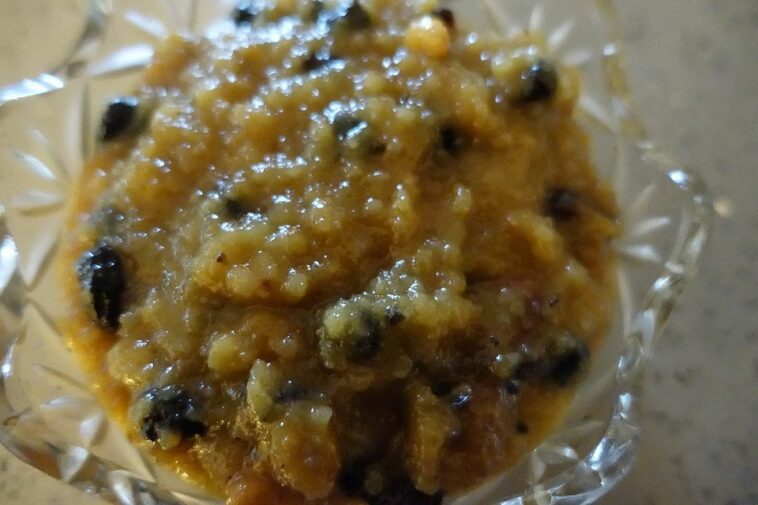
Ingredients for 12 servings:
- 150 g rice
- 2 tsp sugar
- 2 tsp ghee, alternatively clarified butter
- 300 g desiccated coconut, even better 2 fresh coconuts
- 100 g ghee, alternatively clarified butter
- 500 g cane sugar (jaggery), alternatively brown sugar
- 100 g sugar, white
- 60 g cashew nuts
- 30 g raisins
- 10 g ghee, alternatively clarified butter
- 1 tsp cardamom powder or crushed cardamom seeds
Instructions
Working time approx. 1 hour 30 minutes; Rest time approx. 3 hours; Cooking/baking time approx. 1 hour; Total time approx. 5 hours 30 minutes
elaborate South Indian dessert with rice flakes and coconut milk from Kerala
Ada are dried flakes of pre-cooked rice. Outside of Kerala, they are called palada in other parts of India, so the same dessert can also be found under the name Palada Payasam Pradhaman. Ada is available ready-made in Indian grocery stores. Since making the ada yourself is by far the most time-consuming part of the dish, you should seriously consider buying ready-made ada. However, store-bought ada needs to be pre-cooked for about 15 minutes until it has a soft consistency. To make your own ada, first wash the rice, then let it soak in warm water for one hour. Drain and let it steep for two hours, wrapped in a cloth. Then add two teaspoons of liquid ghee, two teaspoons of sugar, and a little warm water and puree with a hand blender until smooth. The finished mixture should have a thick consistency, so be careful not to use too much water. In India, the mixture is spread in small portions on banana leaves and cooked in hot water until cooked. Since this method is often unavailable, you can use a steamer or bamboo steamer instead. Spread the batter on an oiled sheet of paper until it reaches pancake thickness and let it stand in the steam for a few minutes until it solidifies. Now rinse the rice cake on both sides with water to remove the stickiness. The pancake has no internal bond and therefore tends to fall apart. However, since it will be cut into pieces later anyway, this is not a problem. Steam several times and rinse again after a few minutes until no hard pieces of rice remain when you taste it. To continue, first prepare three different intensities of coconut milk. In India, people start by finely grating the flesh of two fresh coconuts. In Europe, desiccated coconut is used instead. Add a little warm water and let it stand for a few minutes so that the water absorbs the coconut flavor. For a more intense flavor, briefly blend again with an immersion blender. The amount of water should be such that only about 100 ml of intense coconut milk is obtained when squeezing. For the second, slightly less intense coconut milk, add enough water to the desiccated coconut to make about 300 ml of coconut milk. You’ll need 400 ml of the third, considerably thinner coconut milk. Melt the ghee, break the ada into pieces, and fry well. Boil the jaggery and white sugar in a little water until dissolved. The amount of jaggery and sugar is tailored to Indian tastes, so the dessert will be very sweet. For calorie-conscious cooking, the amount can be reduced. Add the sugar syrup and 400 ml of the third coconut milk to the ada, stir, and simmer for ten minutes. Next, add the 300 ml of the second coconut milk and simmer for another five minutes. Fry the cashews and raisins in a little ghee and stir them into the dessert mixture along with the first coconut milk and cardamom. The coconut cream should have a thick consistency. Remove from the heat and let it cool and steep for a few minutes. Serve warm in small bowls. As with many Indian dishes, the result doesn’t reveal the effort that went into preparing them. However, you’ll be rewarded with a wonderful taste. Depending on the jaggery used, the color of Ada Payasam Pradhaman can vary from beige to dark brown.


Facebook Comments