 John Myers

Ingredients for 4 servings:
- 500 g flour
- 5 eggs
- 200 ml water (between 150 ml and 200 ml)
- 1 pinch of salt
Instructions
Working time approx. 40 minutes; Cooking/baking time approx. 10 minutes; Total time approx. 50 minutes
Basic recipe
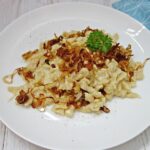
Place all ingredients in a bowl and stir until the batter bubbles. If the batter rolls off a spoon slowly and snugly without breaking, it has the right consistency. Otherwise, add more water or flour. Now fill a large pot with water and bring to a boil, adding plenty of salt. Have a bowl and a sieve ready for draining. When the water boils, briefly hold the spaetzle board and scraper in the pot to moisten them. Place about 1 to 2 spoonfuls of batter onto the board and smooth it down. Hold the pointed end of the board to the surface of the water and use the scraper to quickly scrape small pieces of batter directly into the pot. When the spaetzle rise to the surface during the cooking process, they are done. Remove from the pot and place in a sieve and let drain. Use the remaining batter to make spaetzle, following the same procedure. Occasionally clean the scraper and board of any remaining batter. If there is not enough water in the pot, refill it and bring the water to a boil. Tips: – The dough won’t stick if the spaetzle tool (board, press, etc.) is immersed in boiling water before adding the dough. – If necessary, water can be replaced with eggs, and vice versa. At least 2 eggs should be used for 500 g of flour. The water can be completely replaced with eggs (although you can then use more egg yolks than egg whites). – The normally used type 405 wheat flour can also be replaced with other types of flour, especially whole wheat flour. Add more water if necessary. The dish will then contain more fiber, vitamins, and minerals. You can sometimes also get special “spaetzle flour” from millers or specialty stores. This flour has a special grain size. – Part of the flour can also be replaced with durum wheat semolina or wheat flour. This makes the spaetzle more grainy and firm. They also won’t soften as quickly if left on the serving plate for a longer period of time (which shouldn’t happen anyway). – Using mineral water instead of tap water makes the dough lighter. – It is controversial whether spaetzle should be cooled. Cooling rinses off the starch that has partially dissolved during cooking. Cooling is recommended if the spaetzle are not being processed immediately but are being frozen. – If you don’t have a spaetzle board handy, you can also use a wooden board and a knife with a long blade. From the wet wooden board, use the knife to scrape the spaetzle into the water with a flourish. This is a bit more difficult than using a scraper and usually results in larger spaetzle. – For those in a hurry, cheese spaetzle can also be quickly baked in a microwave. Spaetzle can be made in advance and frozen. – Adding a little oil to the dough makes the spaetzle more pliable. – If you have made larger quantities, you can make a vegetable soup from the cooking water – some vitamins and minerals are already absorbed in the cooking water. – Use less water for the spaetzle press than for scraping. The dough will then stick together less.


Facebook Comments